
Genre: Action RPG, First Person Shooter, Stealth
Year: 2011
Developed by: Eidos-Montreal
Published by: Square Enix Europe
Platforms: PC, PS3, XBOX 360, Mac, Wii U
#169
Feeling Like: Flying close to the sun
Here’s a game that doesn’t get enough recognition, and that includes on the 500. It has one of the coolest looks I’ve ever seen, borrowing heavily from the Matrix with a dose of Cyberpunk and classical renaissance painters. The color palette, lining, shadows, lighting and costumes all sync so well together to create a dystopian future that I may actually want to visit. It’s a near perfect mix of threatening situations, political intrigue, civil unrest, and a few precious moments of peace. Sitting in Adam’s apartment at the golden hour with the light broken by the shades on the window is an image that’s stuck with me. Everything here is clean, sleek and serene; at least, until you look under the surface.
Looking back on it, I can’t help but see parallels with Cyberpunk 2077. I enjoyed Deus Ex: Human Revolution much more; the mechanics are tighter and there weren’t dozens of annoying bugs that got in the way. Cyberpunk 2077 was far more ambitious, but I’ll take a leaner, more focused experienced over a bombastic mess. Most of the time.
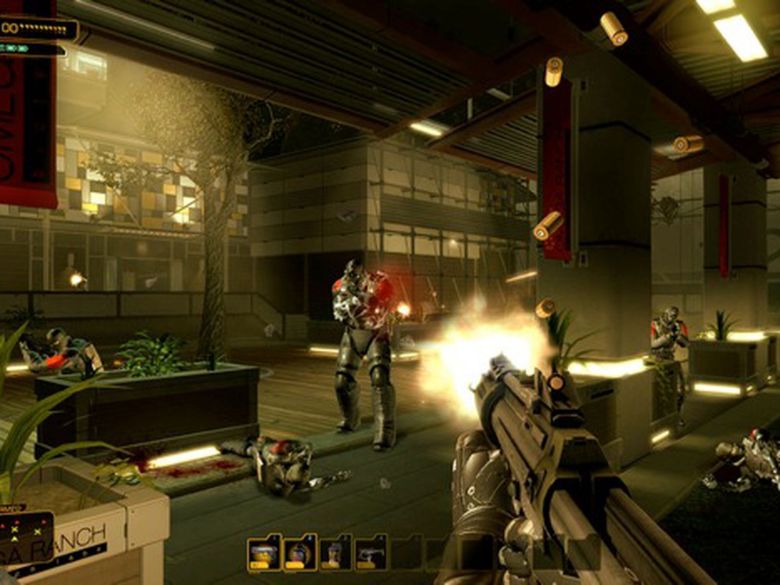
It’s not often I’ll describe a game’s genre as three different ones, but it’s very accurate to say Deus Ex: Human Revolution is as much an action role playing game as a first person shooter …and also a stealth game. Even though I mentioned this is a game that’s clear on its intentions, the way to play through it can be wildly different from player to player, almost to a fault.
The game’s advertising screamed from the hills that you could build your character any way you wanted. A bruiser? Sure. A lethal sniper that relied on stealth? Yup, that’s possible. A tech-savvy nerd who could hack their way to success? That’s allowed, but maybe not recommended. In what is likely the most common critique of the game both at the time and in retrospect are the boss fights. I’m not sure a game like this needed bosses, but if it does, they certainly need to cater to the notion that some players will play entirely different from other players to ensure some builds don’t paint themselves in a corner.
Penny Arcade said it best.
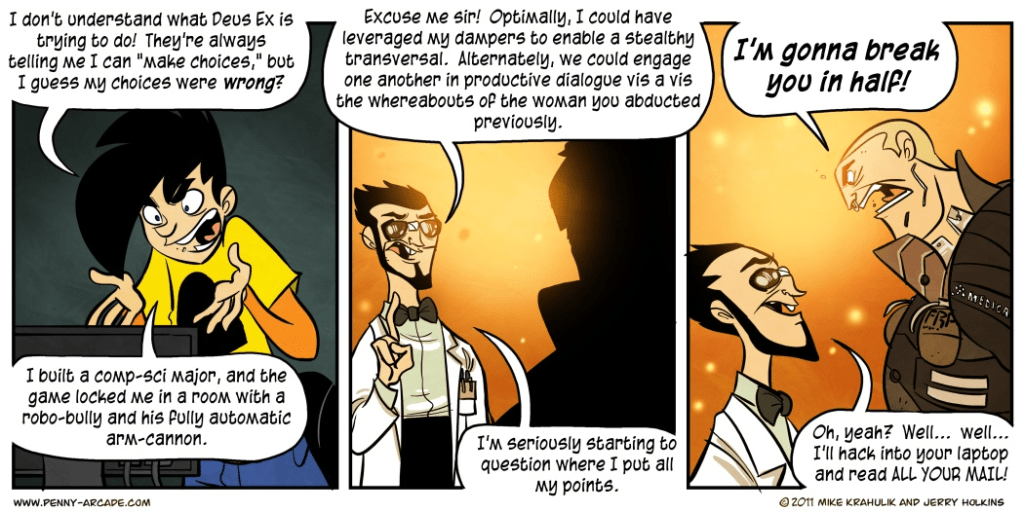
I know exactly the boss they’re referring to. I think it was the first one, and also the hardest in the game. I obviously didn’t spend nearly enough skill points into combat and died a dozen times before cheesing my way through. If a game like Deus Ex: Human Revolution taught me anything, it’s to have multiple saves at multiple points in the game.
Telling gamers that they had “choices” in video games and their choices “mattered” never really moved the needle for me. Frankly, I don’t give a shit and this is coming from a guy who absolutely adored the Telltale adventure games. What I mean is that I don’t require a game to have intricately dedicated paths for each single choice, either major or minor. Show the consequences of my actions, have the characters react accordingly and I’m happy. Besides, I won’t even know what the other decisions yield unless I read about it online. And if it’s the same-ish result, I don’t feel cheated. So what? My journey still felt meaningful. I never got the outrage around that, I’d rather play my way and if I enjoy it, I enjoy it.
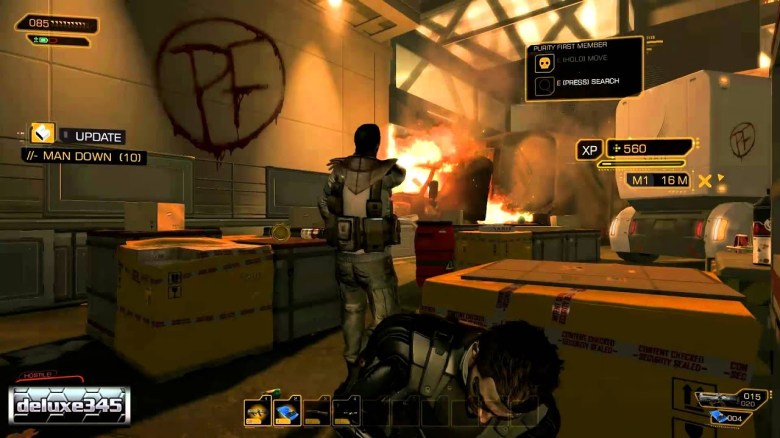
Besides, nobody can say there aren’t a variety of ways of taking down enemies. Even if I don’t recall the details of the story, I do remember being able to take down enemies quietly from behind, or using my cybernetic augments to vault myself across the room to punch somebody in the face. The game does a marvelous job integrating storytelling and gameplay, something that’s very difficult to do. I have to give Eidos-Montreal props for that.
We’re not quite in a future predicted by Blade Runner and Robocop, but you could easily make the argument that the rich and powerful have always better access to health care, nutrition and a myriad of peripheral additions regarding personal well being. I think that’s why this world works so well – it borrows the best stuff from many established science fiction stories and integrates those stories with tried-and-true gameplay. Slapping on a visual style that only Art History majors could fully appreciate was a smart play. I haven’t quite seen a visual contrast like it before and I think that helped the game having its own identity.
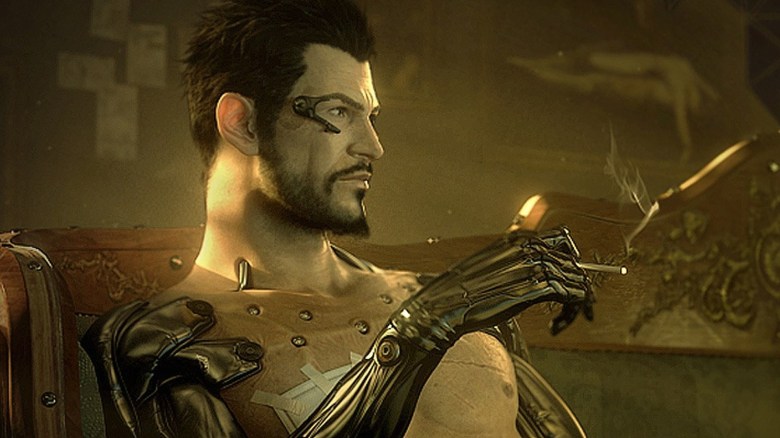
So many other properties are flooding my brain as I try to convey why I really dug this one; Detroit: Become Human, The Fifth Element and naturally the original Deus Ex. I haven’t mentioned the original much because I never played it, but its shadow is cast heavily here – being one of the most revered RPGs of its time means that you can’t just use the Deus Ex name and hope for the best. I’ve read that the developers did a good job updating Deus Ex for a modern audience without dumbing it down too much. That’s admirable, along with Adam Jensen’s voice actor, Elias Toufexis who does a marvelous job here.
But this is also one of those posts where I just want to link the main theme (Icarus) and let that sweep over your ears. If I’ve failed to elicit the kind of emotions Deus Ex: Human Revolution will offer, the song will surely mop up anything I missed. It is an incredible track, one that fully encompasses the grimy, slimy, shiny not-so-distant future where the streets and boardrooms are dominated by a select few who attempt to augment their way to being a Deus Ex machina.
 The 500