
Genre: MOBA
Year: 2013
Developed by: Valve
Published by: Valve
Platforms: PC, OS X, Linux
#9
Feeling Like: It’s complicated
I could put DOTA 2 even higher on the 500, or down 200 spots and either would be appropriate. What started out as a passive interest for a custom mod in Warcraft 3: The Frozen Throne ended up being the only time I’ve been seriously into a competitive, online multiplayer game. For better or worse.
It’s the single game I’ve clocked the most hours on. 1,317 hours, or nearly 55 days of my entire life. I am not proud of that number, particularly if you include the number of matches I played at Mount Allison on the unofficial version. But when you’re unemployed, and a game of this depth is free, it was a hard lure to ignore.
I’ve never played a game like DOTA 2 before, or since. Even though it’s not unique to the industry (League of Legends and other MOBAs are quite similar), it was to me. I watched countless strategy guides, tried to perfect my timing in practice games, discussed item strategy with Eric and eventually entered a few tournaments. We never won, but we played respectably. It was stressful, it flooded my body with adrenaline, it wore me out mentally and after a few close games, I felt emotionally taxed. This is not just another video game.

As my DOTABUFF.com profile will show, I never leaned towards a single hero. Every character was so interesting, or strange, or badass. They played completely differently, even within identical classes or roles. I was perfectly content to settle on a group of 10 or 15 and circulate between them depending on what the team needed. I was never very good (my win % always hovered around 50), though near the end I was frequently put into “High Skill” games, or even the dreaded “Very High Skill” matches. When I saw that, I wanted to have a word with Valve. I felt like they were being polite, nobody who had me as a teammate would describe my skill as anywhere near “very high.”
The only noteworthy thing about my time with DOTA 2 was my participation in a the public match I was in with Jeff, Dob and Ray that lasted 1 hour, 42 minutes and 14 seconds. It was, at the time, the 15th longest public match in DOTA 2 history. Hardly noteworthy, but when an average match was around 40 minutes, it felt like a marathon. Thank the DOTA Gods we won.
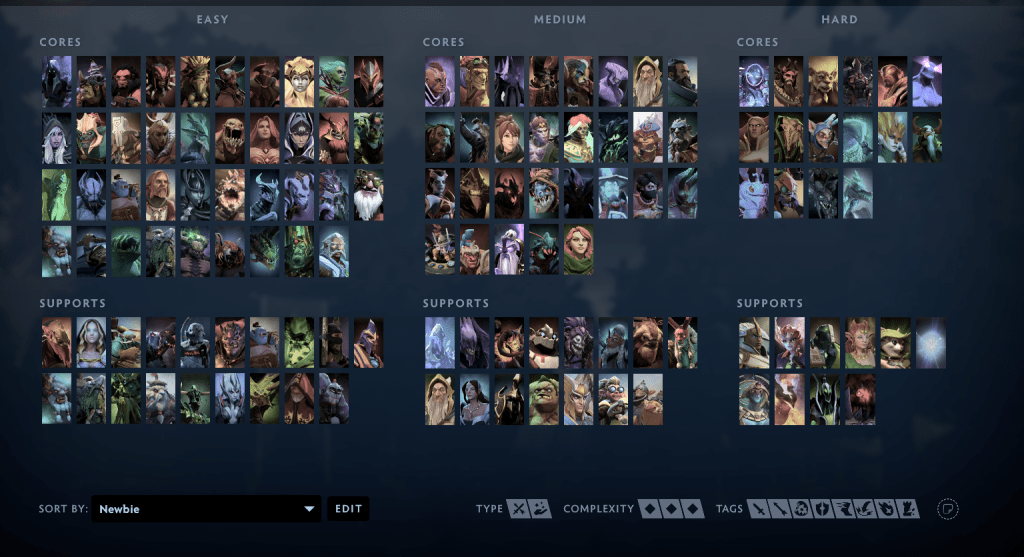
DOTA 2 provided so many memories and emotions that it was the rare time I discussed a game twice on Snackbar.
Dota 2 and the appeal of games as sport
People sometimes ask me why, at my age, I still play video games frequently. When they ask this, they’re genuinely interested; we’re approaching a point now where it’s sort of silly to completely scoff at a hobby played by hundreds of millions of people around the world everyday. So without a hint of malice, they are keen to know why somebody would spend not a small amount of time invested in something that “isn’t real” or “just a game.” It’s a legitimate question.
I try to convey to them that with some games, it’s all about the community built around playing with other people that draws me in. There’s something inherently different about beating another human being than beating a computer; there’s a certain unexpectedness that is thrilling. As you’re about to face off against an unknown opponent, thoughts start to creep your head. Are they good? Am I good? Have I practiced enough? Breathe. Relax. It’s only a game.
These thoughts also enter your head in another venue; an example that the uninitiated will surely understand. It’s a parallel you can use when explaining your passion for gaming. Sport.
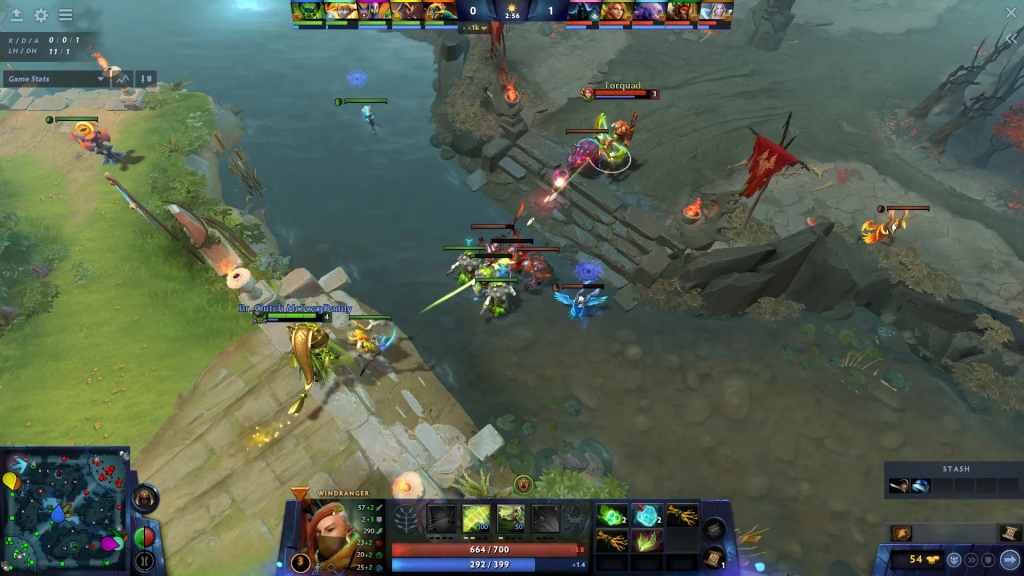
Playing an online game against another person doesn’t require nearly the same amount of athletic ability, nor does it take much of a physical toll on the body. It’s not a good workout. However, the thrill of winning and losing, of snatching victory from the jaws of defeat, or the agony of losing a close game, is just as real in video games as it is in real life. Those feelings exist, otherwise you wouldn’t have millions of people playing them each day. It simply wouldn’t happen.
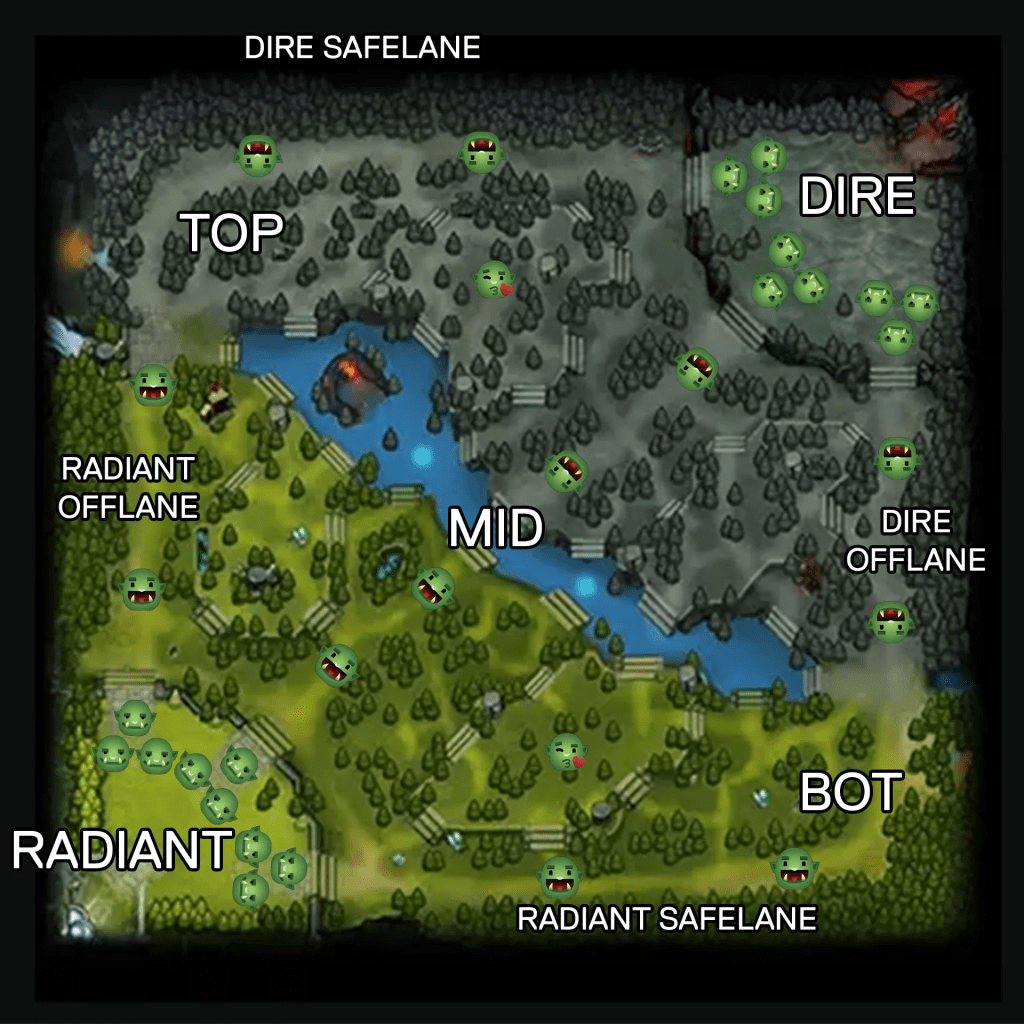
The game I’ve been playing lately is Dota 2. It is a multiplayer online battle arena (MOBA) game, in which five human players go up against another five human players in a hybrid RPG/real-time strategy scenario. You choose a hero (or are randomly given one) from the pool of over 100. Each hero has (at least) four abilities. You level up in the game by killing generated “creeps” starting at each opposing base. You also gain gold by getting the last hit on a creep, or by killing an enemy hero. The result can be a frantic, tactical, maddening and very rewarding experience depending on which hero you play and how well you and your teammates cooperate.
Never before has the phrase “you’re only as good as your weakest link” been more suitable. A few deaths here and there won’t change the game completely, but heroes get significantly stronger when they kill an opposing hero. If the trend continues, that hero is “fed” and becomes so powerful that nobody on the opposing team can handle them, regardless of skill level. It is for this reason, and many others, that Dota 2 (and games like it) are not easy to get into. They’re not rookie friendly. You can’t just jump in and expect to be good, or anything resembling good. You need hours and hours of practice. You need experience playing the game with dozens of heroes before you can get comfortable with the advanced tactics of the game that go beyond simply trying to kill enemy heroes with your abilities.

Aside from this, there are well over 100 items to purchase and collect. You’ll never play the same game twice, due to the massive amount of variation and choices in the gameplay. It is competitive by nature; you can’t play a game passively. It requires your full attention for 99% of the game. The other four human players are counting on you. It’s intimidating, brutal, merciless and completely unforgiving. It’s also mesmerizing, addicting, thrilling and shocking.
All the points I’ve mentioned above can be translated into a real-life athletic competition. A weak link can make victory impossible. Most competitive sports aren’t rookie friendly; if you haven’t played the game many, many times before, you’re going to be lost. Your technique is going to be nonexistent, and good players will beat you ten times out of ten. You may be overwhelmed before you start.
But there are positive aspects that connect Dota 2 and sports. The best time you’ll have doing both is playing with friends. Talking strategy, then implementing it successfully, is very rewarding. Bailing out a friend in a tough spot, only to have them thank you later when the action dies down, positively reinforces your skill and your decision. Having more experienced friends teach you the inner workings of a game is less intimidating than learning it from a stranger. (It certainly doesn’t help when a stranger tells you that you suck at a game you barely know how to play. No positive reinforcement there.) Memorable victories will stick in your mind for a long time. You’ll try to forget blowout losses as soon as possible. You’ll learn from close games. You’ll be on the edge of your seat for most of it. Even if you’re out of the action temporarily, you’re rarely bored and always focused on the task at hand.
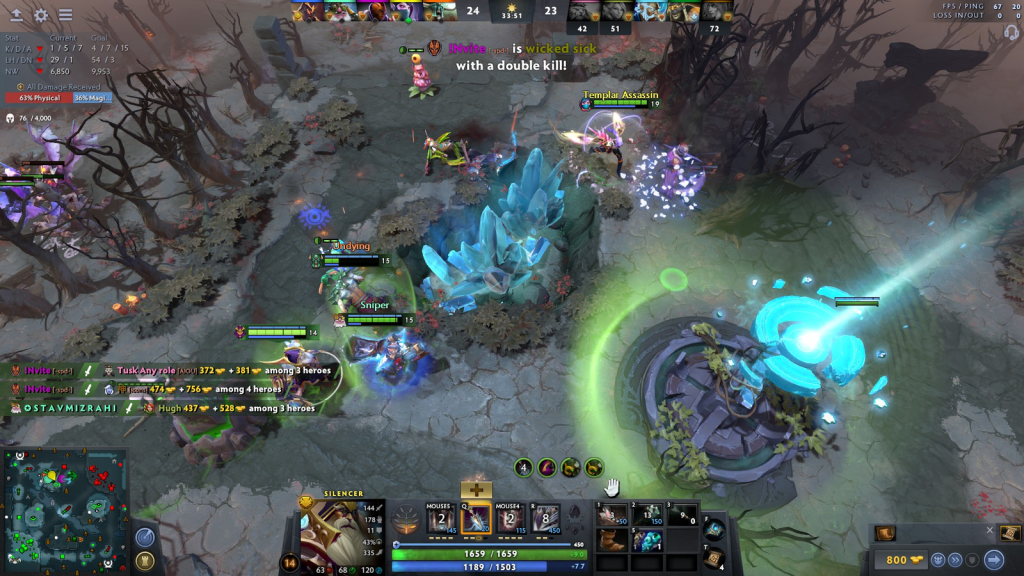
Dota 2 has a flow like sports. Games are decided at crucial moments. Wins and losses can be traced back to these moments, and whether you made the right or wrong move. Positions are established prior to the game starting. Teams tend to let the first few minutes go by without a ton of action; they want to get a feel for the other team. How skilled are they? Who should be a target? Is there a general strategy we want to implement based on the abilities of our players? As in sport, communication in Dota 2 is absolutely key to victory. Superior cooperation and coordination will win the majority of the games. It doesn’t matter how individually skilled you are; you can’t take on five heroes at once in Dota 2.
Comebacks are rare in Dota 2, but they do happen, about as often as in sport. They make for the best stories. The unusual, the rare or the surprising are always a draw in any kind of team activity. The speed in which certain defeat can turn into a potential victory is drastic. What you have to remember is that these games are being played by human beings. We react emotionally to almost anything that happens in our lives; those emotions are enhanced in organized competition.
If you’re up by a large amount in soccer game, for example, your coach may tell you to play more passively. You’ve basically won, now you just need to shut the other team down. No problem. But the other team scores a goal. You get frustrated, which might lead to your play worsening. It doesn’t matter if you tell your teammates to calm down. Another goal happens, and they’re in full panic. They may say they’re relaxed and focused, but we fundamentally can’t work that way. Nobody can just turn their emotions off; we react. Dota 2 is the same; just because you’re winning doesn’t mean you’ll win. The tide can turn. Things can change. Maybe a massive fight leads to the other team winning a slight advantage. No big deal, you say to yourself, we’ve still got this in the bag. But your laissez-faire attitude might lead you to miss a crucial opening to win the game, and then it’s lost forever. You cannot believe that the other team is making a comeback. How did this happen?
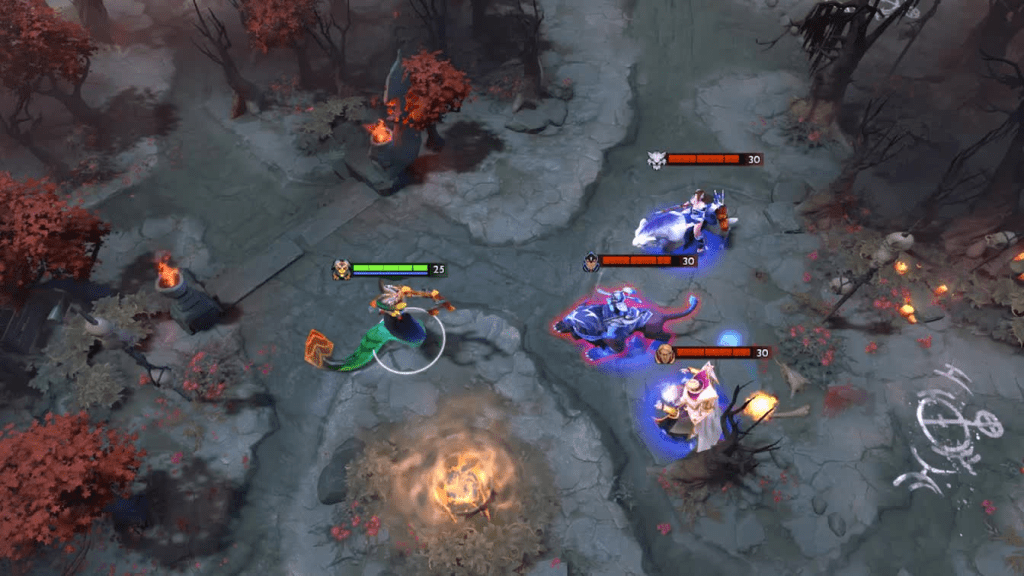
The roller coaster of completely unpredictable results is one of the major draws of a game like Dota 2. If you’re playing with random people, you have no idea if they’re going to be forgiving, kind teammates or absolute jerks who will insult you the minute you make a bad move. You may select a hero that you’re traditionally terrible with, but end up having an amazing game with them. Sometimes you’ll do everything right; you’ll be in the zone. You always seem to have enough money to buy the item you want. Your attacks are perfectly timed. You’ll get that lucky last hit in, your teammates will save you from dying every time and you’ll win the game with almost no effort. This happens in sports all the time. Elite athletes have the ability to not only reach a higher level of play than the rest of the players, but they can maintain this peak for extended periods of time. You’ll hear things like how everything is in slow motion to them. They can see their teammates clearly. They make impossible plays seem easy. They win the game before it’s even over. Don’t ask how you get into this “zone”. You can’t force it, it just happens.
I wouldn’t recommend Dota 2 to just anybody, much like I wouldn’t recommend jumping into a competitive athletic competition with no prior experience. The learning curve is steep and the game is constantly evolving. It’s best to find the game type you’re most interested in. Practice, get somebody to give you pointers and, above all, try to play with your buddies. Losses don’t feel as bad, encouraging talk is more prevalent, assholes are kept to a minimum and wins feel that much better. The initial learning phase can be anything but fun. Once that’s over though, it’s anybody’s game.
Lessons from a trip to The International
I’ve written about LAN parties before, but I’ve never been to anything like this. The International 2014, the championship tournament for Dota 2, was held in Seattle from July 18 to 21. It was easily the biggest spectacle in competitive gaming. It was certainly the most lucrative, as the collective prize pool was over 11 million dollars, with the winning team taking home almost half of that. But how was the event? Was it successful? What does it mean for gaming? And, of course, how did it make me feel?
I can say, unequivocally, that it was the most distinct-feeling event I’d ever been to. I’ve been to every live sporting event you can imagine: soccer, football, basketball, hockey, cricket, golf and professional wrestling, to name a few. I’ve been to a few concerts, many theatrical productions, Broadway musicals and magic shows. I’ve even attended and participated in video game tournaments, but compared to this, that’s like saying I’m prepared for a cross-Atlantic swim after taking a bath.
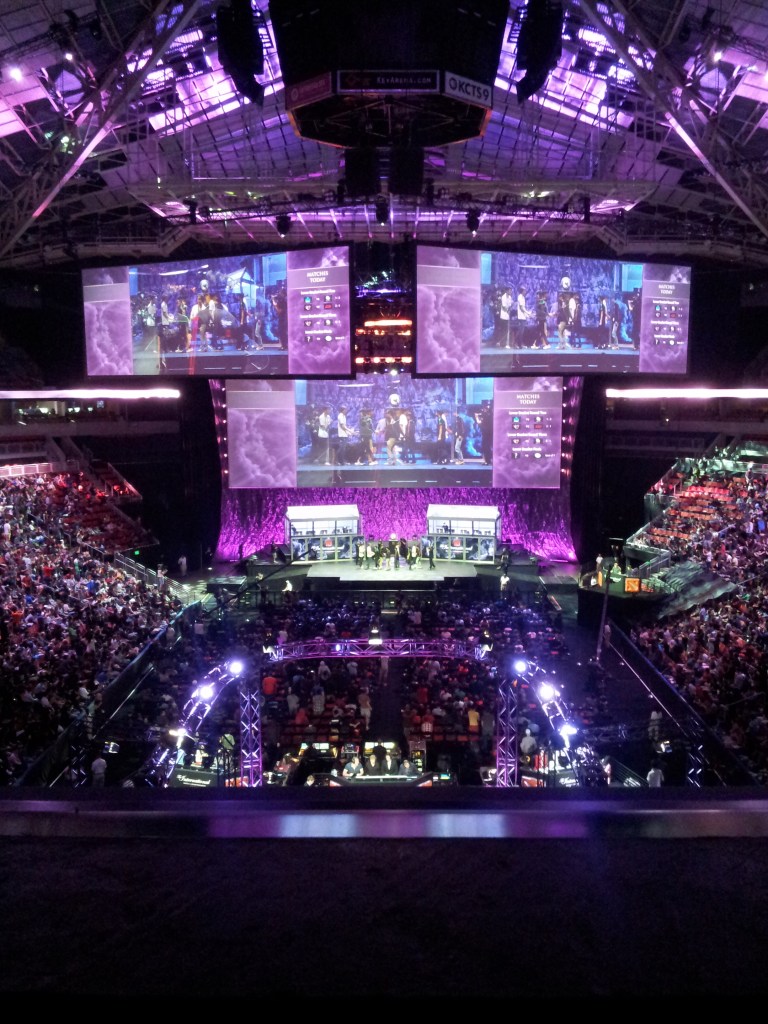
The sheer scope was impressive. I’d heard the numbers of 10,000 or 12,000 thrown around, but the actual size didn’t hit me until I was sitting in my seat, in the stadium, surrounded by other people. I looked to my left and saw endless rows of fans, cheering on their favorite team. The upper bowl was absolutely packed. There were lines to get in the arena, lines for washrooms, lines for concessions, lines for everything. I quickly realized that despite the game’s relative niche status, it was anything but niche in Seattle. Everywhere I went, there were fans. I saw lanyards and tickets around the necks of people at restaurants, bars, grocery stores and walking around on the street. Everywhere I went, I couldn’t escape it. That kind of confirmation that your hobby is shared by tens of thousands, all around you, is thrilling.
The core of the event is watching the top eight teams in the world playing matches of Dota 2. A tournament called “The International” wouldn’t be appropriate if it didn’t have teams from all over the world; players heralded from Ukraine, China, Malaysia, Estonia, Canada, the Netherlands, the United States, Sweden and Russia. It showed in the fan base, as well; the variance of flags being proudly displayed inside the playing area made me proud to be a fan of the game and instilled a strange sense of digital jingoism. See? We all get along through a common interest. Our lack of hostility, pride in belonging and ease of respectful conversation stems from a video game that makes you want to stab yourself in the ear every ten minutes out of mounting frustration. Huh.
It was a show, much like how going to see the Seattle Seahawks live is more of a rock concert than a straight-up football game. The International had pre-game and post-game analysis for every match. It had professional commentary, and like the commentators in “real” sports, their job was to keep us updated on the action but also subtly explain the rules. This is a monstrous challenge; Dota 2 has so many intricate details, spontaneous strategies and changes in momentum that a lesser talent would be better off just announcing the obvious plays and leaving it at that.
My girlfriend joined us and was a very good sport about it. There were very few girls at the event (even fewer who weren’t dressed up in cosplay), and she was relatively new to the game. She was my measuring stick of what appeal this would bring an inexperienced player. Valve would be wise to use her (and other rookie observers’) feedback.
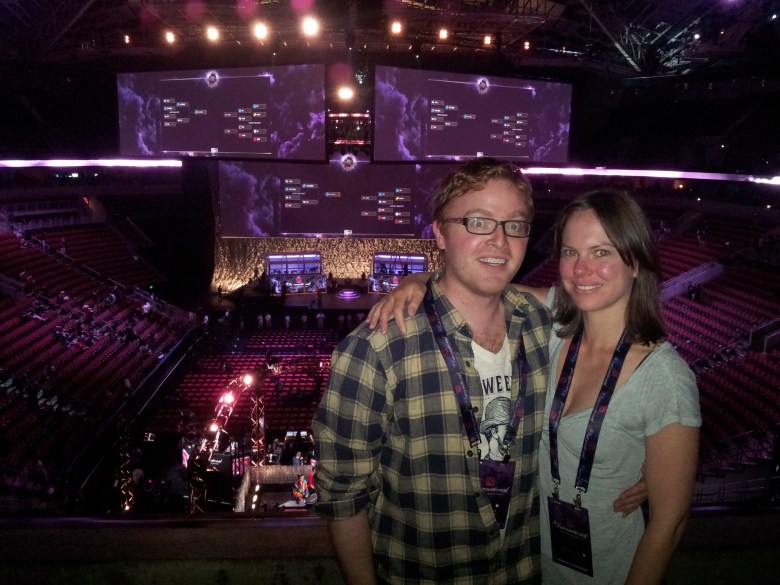
“I really wish they would ensure we know everybody’s back story. It makes me care so much more about the teams and helps me choose who I want to win.”
Me too.
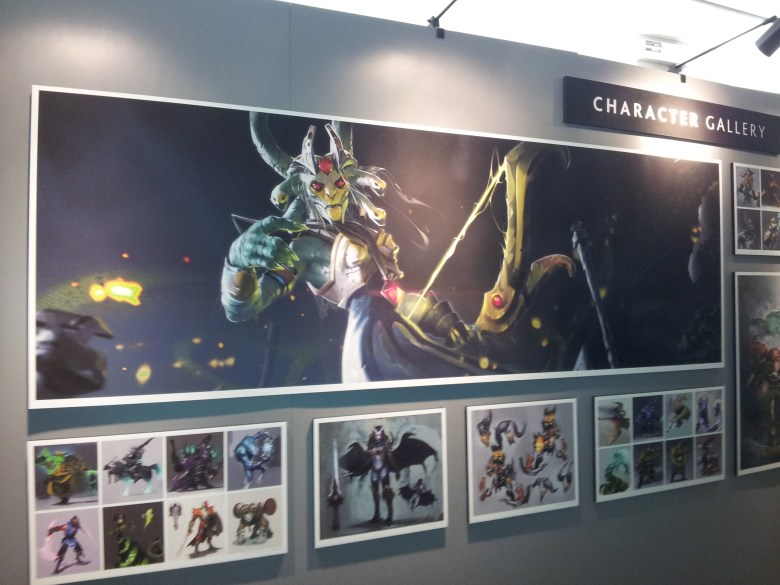
“The different art pieces on the wall are amazing; I can’t believe how beautiful they are.”
Me too.
“Exactly how long is the line to the secret shop?
I am also wondering that.
Ultimately, what surprised me the most about the event was not the quality of the games (which was overall quite good), nor the mass hordes that attended each match with bated breath, but the economy that Valve has created, and the star of this particular show was the secret shop.
I knew the game was popular. It may be totally unknown to the layman, but to the hardcore, it’s not exactly the new kid on the block. I also knew that Gabe Newell, the co-founder of Valve, is the Mephistopheles of making money via microtransactions. So I should have known how insanely popular the exclusive physical items at The International would be.
How popular? The wait to buy them on day one was approximately five hours long. A pleasant mob showed up before 8 a.m. to ensure an early spot and chance to purchase such epic goods as plush toys, hoodies and pint glasses with Crystal Maiden on it. Frostbite Lager is delicious, by the way.
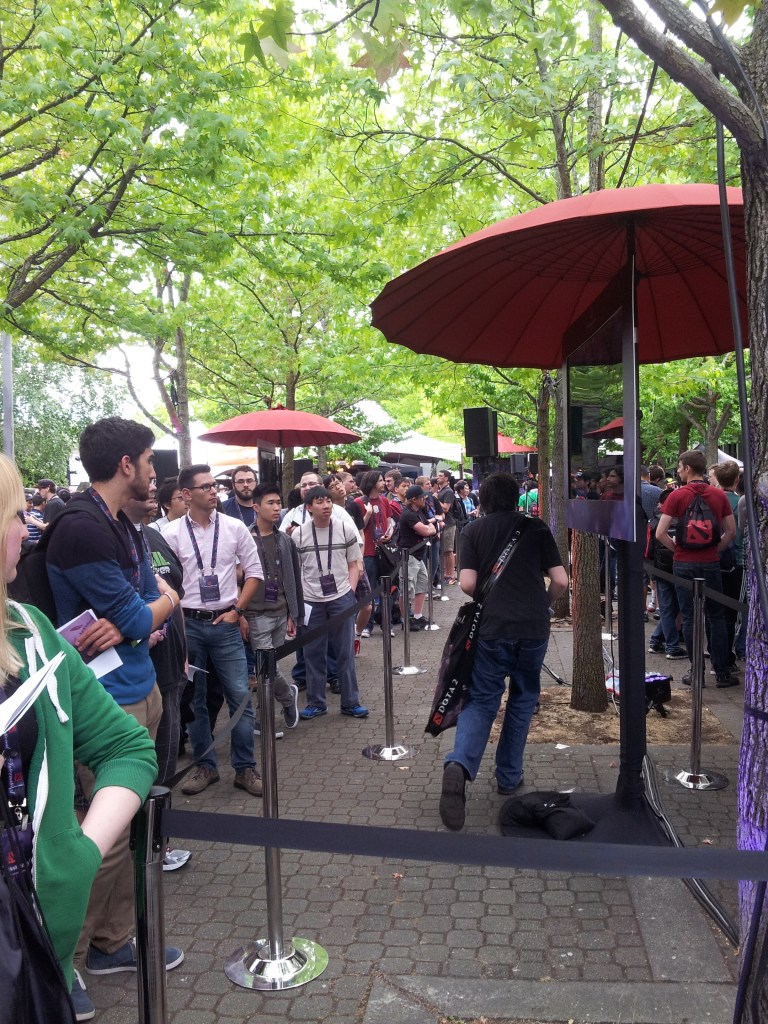
The lineup snaked outside, made its way into the arena and all the way around the upper hallway and back again. Very few opportunities presented themselves to engage in activities other than line attending; going to the bathroom meant risking your spot in line, although TVs were sporadically set up to allow the brave economists to watch what they came for in the first place. Their reward? Extremely valuable collectibles.
Being first in line, or among the first hundred or so, netted you a chance to purchase, essentially, as much as you want. There were rumored limits to how many or how much an individual could buy, but there were also rumors that a guy from Singapore somehow purchased $13,000 worth of goods that immediately ended up on eBay.
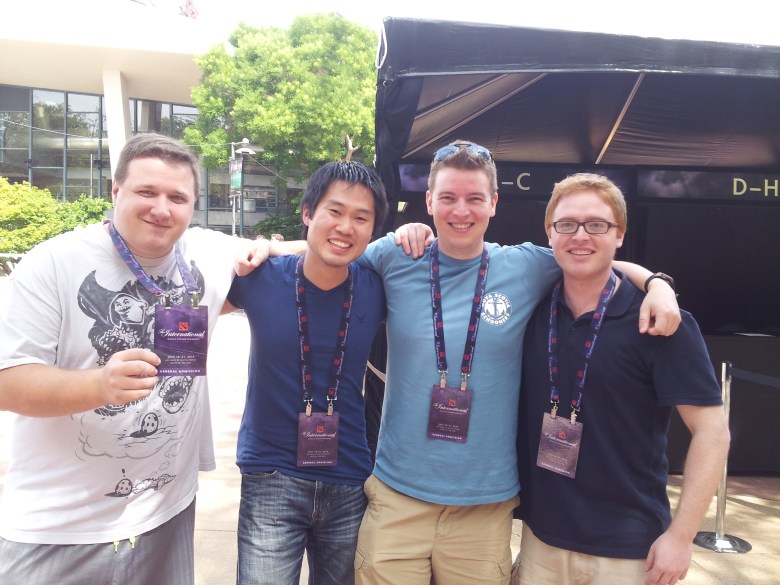
There’s something unsettling about a $20 figurine going for $150 before you even knew you could buy it. The mini economy, and fervor at which participants stood in line, was puzzling, intimidating and it totally piqued my curiosity. After looking at the sales catalog and seeing the lack of hesitation to buy… yeah, of course we got in line. It wasn’t until the end of day two and we were lucky enough to “only” have to wait an hour and 45 minutes. As punishment for our tardiness, much of the stock was already out. Female jackets and hoodies were gone. Nearly all the T-shirts, plush toys and figurines were cleaned out. The look on my buddy’s face when they told him this was identical to the same face he made when we told him it would take at least a few hours to line up. Neither remotely resembled pleasant.
The community marketplace didn’t end there; the artists had performing workshops in the arena for aspiring artists, demonstrating how to create mythical robots, terrifying demons and shadowy animal assassins. Dota 2 celebrities were often found circulating the arena, taking photos and chatting with the eager ticket holders.
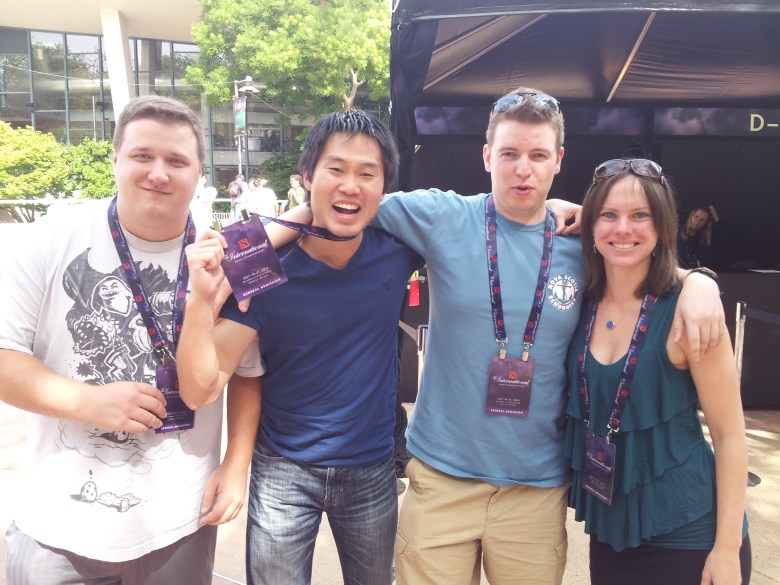
There were some definite drawbacks that sparked some anger upon our little group. Watching teams battle back and forth in the matches was exhilarating. The commentators were getting appropriately excited at the right times, some insane strategies emerged that nobody could have predicted and there were more than a few near-impossible comebacks. But near the end of the tournament, a few results had us shaking our heads in disbelief. If a team captain types “gg” (good game), it’s a forfeit and the match is immediately over. In the final five games of the tournament, we saw an average match length of under 20 minutes before one of the teams gave up. With an ultimate prize of five million dollars, I felt the forfeits came far too easy. Where was the heart? This was what I’d waited for? A pathetic few final games certainly soured the overall quality of the matches.
Part sport, part Vegas imitation, The International was a truly special event for me and my friends. Seeing how dedicated the fans were, and how efficient Valve was at ensuring them that this was a welcoming event, was a thrill in itself. Many of the people I talked to had played the original DOTA, more than ten years ago. How a mod made by a few people spawned into the greatest video game event the world has even seen? I’ll never know. How a free game entices thousands of people to spend their vacation days lining up to buy a digital cape for their favorite hero for $8.99 is totally beyond me.
Phew.
Fourteen screenshots and more than 3,500 words make this the most bloated entry on the 500, but DOTA 2 warrants it. It’s impossible to condense my feelings about it without going on and on about the sorrow I felt during a crushing loss, or the ecstatic euphoria I felt after a massive win. There is not a single game on the 500 that provided this range of reaction. It warrants a spot in the Top 10, but only after the dust has settled. It’s been seven years since my last match. I don’t plan on going back, I’ve more than had my fill. I’ll be content to keep up with the changes and news from a distance. I was happy to be a regular entrant in the arena, but I’m also relieved to never having to worry about getting ganked, or getting toxic chat messages for picking the wrong hero ever again.
 The 500