Genre: RPG
Year: 1997
Developed by: Square
Published by: Sony Computer Entertainment
Platforms: PSX
#26
Feeling Like: Anything but final
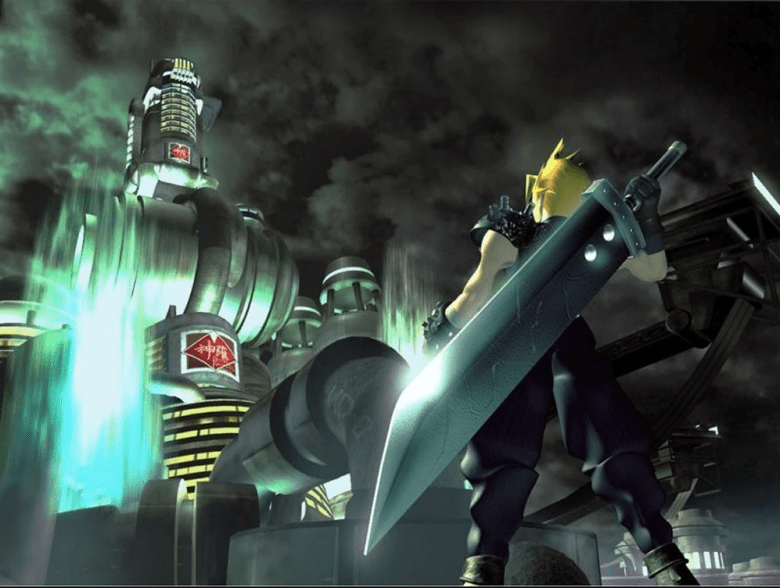
Other games have introduced revolutionary mechanics, or caught the mainstream’s attention, or sold a bazillion copies, or shifted the power in the industry. I don’t think any of them can hold a candle to Final Fantasy 7 in this regard. The 80s and 90s belonged to Nintendo, despite Sega trying their best to keep up. Once Final Fantasy 7 launched on this new “PlayStation” thing, that was it. Nintendo’s time of basking in the sun as king of the castle was over.
Final Fantasy 7 was everywhere. Everywhere. I saw ads for it on TV, and in movie theatres. They were good, too. I still remember them.
A story of a love that can never be…
They said it couldn’t be done in a major motion picture. They…were right.
I was intrigued. Of course I was! I didn’t have a PlayStation, but I had eyes and ears. Every magazine and every website was covering it like it was the biggest thing the industry had ever seen. They…were mostly right, it was. The reverberations are still being felt today, as Square’s remake of Final Fantasy 7 is equally sublime, if a little unclear as to what the game is. A kid at GNS in 8th grade had a GamePro featuring a walkthrough for the first four hours or so. I traded him two chocolate bars for reading it at lunchtime. Chocolate bars come and go, but I wanted to know the inside scoop on the first boss. Priorities.
The 500 is littered with RPGs, it’s my go-to genre after all. But only a select few really rise above; I’m keen to buy into the story and characters, regardless of the shortcomings of the genre both then and now. The minutia never bothered me, I always found random battles and grinding part of the adventure. And, like a sicko, I like grinding. I enjoy being able to set myself an unnecessary target of a certain level before I’ll allow myself to venture forward on the story. Everybody at level 31 yet? No? Ok, let’s go walk around in a circle and spam attacks until they are. I’ve always enjoyed doing it, what can I say? Incremental number increases on a menu does it for me. I remember Dobbo and I tried to invent a term for it. “Advanced leveling” was the best we could come up with, but “grinding” really does roll off the tongue better.

Final Fantasy 7 is home to many, if not all, of the JRPG tropes and pitfalls. The dialogue can be hokey, the character models look downright goofy. The tone can be all over the place. The game is probably too long. The combat, while enjoyable, does get slightly repetitive, even for RPG veterans. But it achieves what I want in an RPG; it made me care. While the main protagonists aren’t expertly written, their visual designs are terrific. Their backstories make sense in the context of the world, and the world building is truly tremendous. The pre-rendered backgrounds made me feel like every location I visited made sense based on the people who inhabited the world. It was lived in. There were books on shelves, lamps next to beds. Playgrounds for children. Docks for boats. Libraries filled to the brim with books, some overflowing onto the floor. I have such a soft spot for the backgrounds, like insanely detailed little dioramas, that I never minded the weird little blocky polygons that represented Cloud and the rest. Never an issue.
If you want state of the art graphics, if you want to see what we saw in our heads in 1997, check out Final Fantasy 7 Remake.

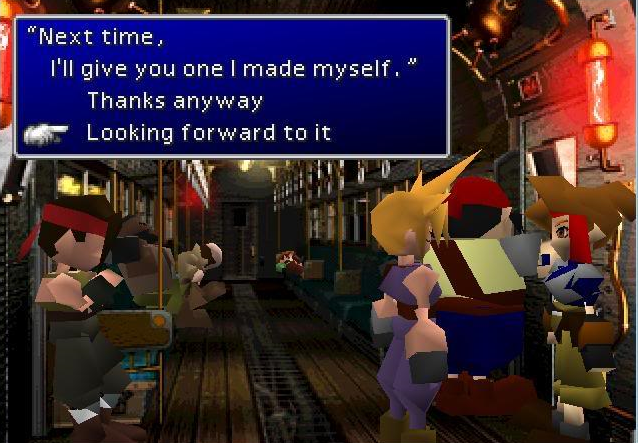
This felt big. The second I hopped off the train and introduced myself to Barret, I was completely hooked. It’s not often you start out as an eco-terrorist taking down a corrupt organization responsible for draining the life of the planet. I mean, small ragtag bunch vs. evil empire is the foundation of most Final Fantasies, but this one being in 3D made every step and scenario feel fresh. It was a cinematic spectacle – the art style completely transformed in fights. All of a sudden, Cloud, Tifa and the rest looked sleek and dangerous. The camera would swing around dramatically while you were casting a spell, or showing giant enemies from low angles to make them appear even more intimidating. Every animation made me feel like I was watching some cartoon from Japan that I shouldn’t have been privy to. I felt privileged. This was goddamn amazing.
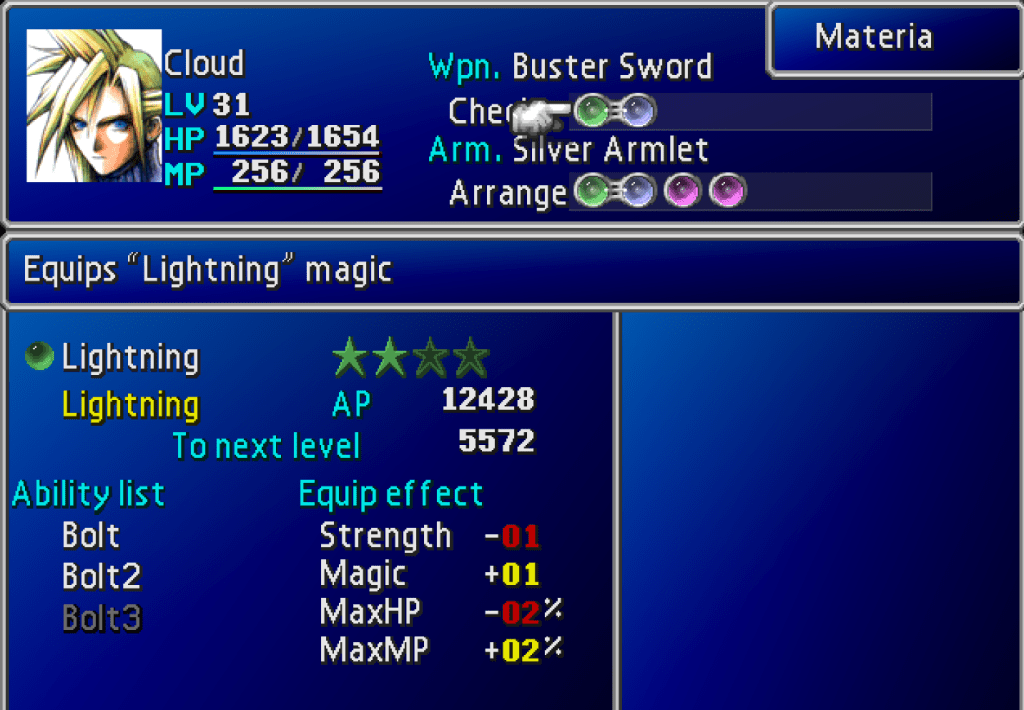
The Materia system made complete sense to me, right off the bat. It’s still one of the most flexible, enjoyable mechanics in RPGs to the point where I think most developers just wish they could use it in their own game. There are countless amounts of little colored orbs that you can equip to various pieces of equipment. Each Materia orb gains experience, and can be transferred to other characters as long as they have the slots required. You can also combined two pieces of Materia if they slot in together. This meant any character could cast any spell, and experimenting with various new Materia completely blew my mind and skyrocketed expectations of what was to come. All of a sudden, status effects or buffs became far more interesting than in previous Final Fantasies.
Now, if an RPG is this high on the 500, the soundtrack has to be phenomenal, right?
You…are right.
There’s no beating around the bush – this is an insane collection of songs. A murderer’s row. Despite the original hardware not doing the songs justice, the melodies are breathtaking. Among the best ever created for a video game. I can’t even pick my favorite: The Opening Bombing Mission, Tifa’s Theme, Under the rotting pizza, Fight on!, the Main Theme (my God…), Jenova, Those Chosen by the Planet, Cosmo Canyon, Cid’s Theme, Listen to the Cries of the Planet, Aeris’ Theme, and perhaps the best of all, One-Winged Angel.
I’m speechless. I’ve had the soundtrack running all day to jostle my memory and it’s shocking how many tunes I remember, and revere. Do yourself a favor and familiarize yourself with ocremix.org, one of the best websites on the internet. If you want unique versions of the timeless songs I listed above, there 138 remixes here that you can listen to for free. There are countless orchestrated versions on YouTube, there are even live concerts. I’ve been to one and yes, I teared up a bit. If you saw me at my wedding, you’ll know that is not a surprise.

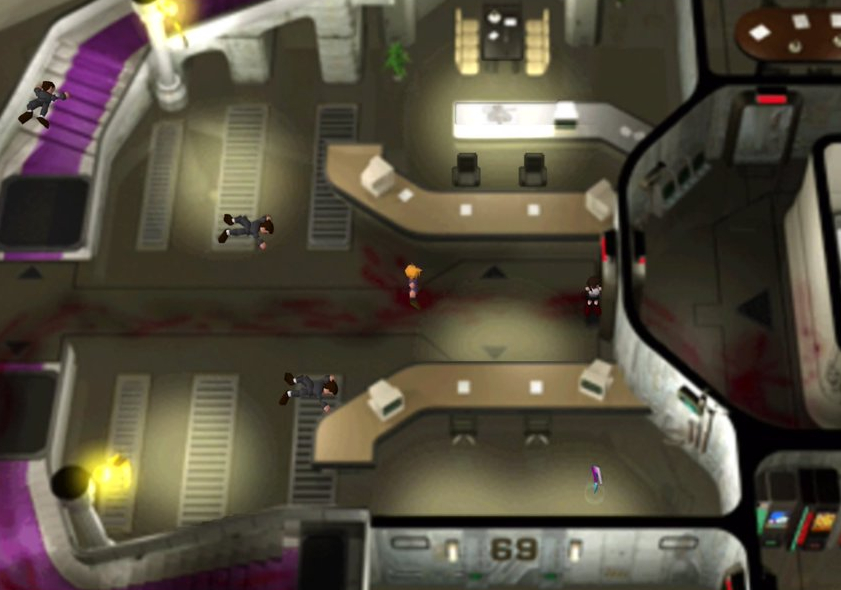
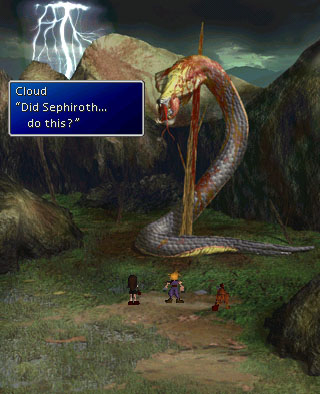
There are so many details that make Final Fantasy 7 that I’m sure I’m going to miss, so I’ll try to focus on the big ones. The story is great; it may be bombastic and cheesy but it’s earnest. Midgar, and the denizens of it, is a triumph. One of the most compelling cities in gaming. It’s the defacto one we compare other starting areas to. You don’t even leave it until the first five hours or so. Rooting for the planet against a polluting entity is a cheap, but easy way to get us on Avalanche’s side. Sephiroth, the game’s main big bad, is easily one of the most iconic characters in gaming. The impossibly long samurai sword, the intimidating glares, his power and the fact that you don’t really interact with him all that much adds to his mystique. Wisely, Square showed how strong he is instead of just telling us. The blood trail in the Shinra building and the impaled giant snake are two such examples. I felt like they were building up him like a myth and when you do square off, it feels like a momentous event with sky-high stakes.
The scene everybody remembers, myself included, is Sephiroth’s killing of Aeris. It’s an impactful moment; Aeris’ song already sounds like something you’d play at a funeral. She dies out of nowhere, with Sephiroth plunging down in full motion video (FMV) and impaling her from behind. There’s no blood, but her Materia piece falls from her hair, and the theme kicks in the second it hits the ground. Taking her to the water and letting her sink is one of dozens of iconic images that have stood the test of time. It’s really well done.
Aeris’ death hits hard, the party is devastated. She was your main, dedicated healer. She was the most innocent, the most kind. Losing a party member permanently was a very big deal, it didn’t really happen all that often. Certainly not a character that’s vital to your success in gameplay. Credit Square for not bringing her back, no matter what rumors you read online.

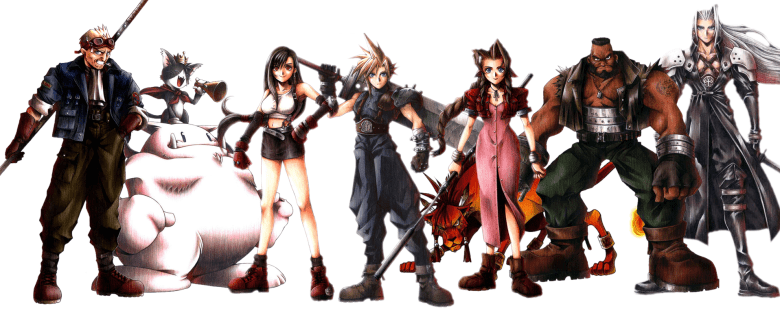
Like all the best games on the 500, Final Fantasy 7 works because everything works. The cast of characters is as varied and strange as ever – the Turks, Hojo, Zack and Rufus are just a few of the bizarre personalities you’ll come across. There are secret enemies to tackle. The ATB system works smoothly. Extra bits of window dressing, like having the main cast have last names as well as first names make such a difference. Or their blood types shown in the instruction manual, because the Japanese think blood type correlates with the kind of person you are. Or sailing around the world on the Highwind. Or the tender toughness of Tifa, or the dogged stubbornness of Barret, or the gritty determinism of Cid, or the care-free attitude of Yuffie, or the sensual slickness of Vincent, or the noble fierceness of Red XIII, or the odd confidence of Cait Sith. Or the love Cloud has for Aeris, the revenge he seeks, the danger he’s willing to endure, or the memories he’s willing to suffer to defeat Sephiroth. It’s all here.
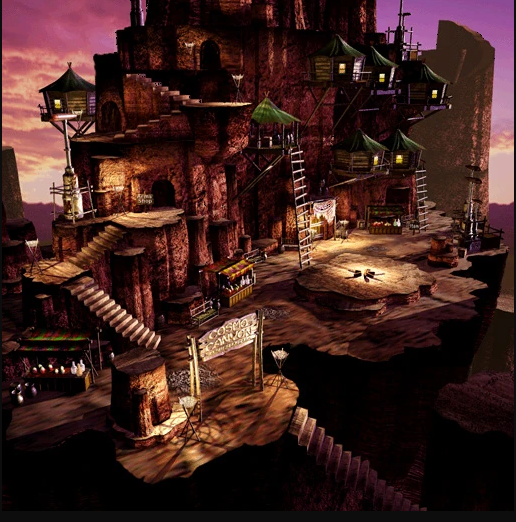
There’s a reason Final Fantasy 7 swept the world in 1997 and some of that reason still remains with us today. The mainstream audience had taken notice – RPGs were no longer just about numbers, text and menus. The magic of Gaia is just as marvelous in 2020 (and in 2024 with Rebirth on the way) as it was in 1997. There’s mystery and mayhem, combat and conflict. Death and despair, hope and heart.
What a game.
 The 500