
Genre: First Person Shooter
Year: 2004
Developed by: Valve
Published by: Valve
Platforms: PC, XBOX, XBOX 360, PS3, Mac OS X, Linux
#60
Feeling Like: A free man
Within the span of a single year, Valve changed gaming forever. In September of 2003, they launched Steam. What started out as a bungled launch eventually resulted in the disappearance of physical copies of PC games entirely. I cannot overstate how massive a move this was, how much money it would make, how it turned Valve the game developer into Valve the engine licenser and Valve the dominant force for digital entertainment marketplaces. Nobody knew about, or wanted, to download their games back in 2003. Now, 20 years later, I don’t even have a CD-ROM or a disc drive for my computer. Why would I?
I’ve gushed lately about Uncharted 4’s facial capture technology, and BioShock’s drowned city of Rapture and Portal 2’s amazing puzzles; all of them owe their existence to Half-Life 2. Valve showed that you didn’t need to interrupt the action to progress the plot, and how they present happenings is as important as the content itself. Maybe that Marshall McLuhan knew what he was talking about. Playing Half-Life 2 for the first time felt like I was playing a PC game for the first time. I wasn’t used to this level of detail in the environments, I wasn’t used to being this mystified at how the story unfolded before me and I certainly had never experienced the amount of freedom given to me when it came to tackling puzzles, platforming and combat. It is one of gaming’s great achievements.

When the soldier above ordered me to “pick up that can”, I wasn’t sure what to do at first. This must be a cut-scene…nope, I …oh! That makes sense, I can pick up the can and throw it in the garbage. This amounts to a tutorial, though cleverly hidden behind plot exposition. The alien empire known as the Combine have taken over the planet. With this simple line, it told me all I needed to know – that I had to obey orders, that the soldiers will harass anybody with the most minute tasks AND gameplay wise I could pick things up and place them virtually anywhere.
Everything feels oppressive and dark, though Valve lets the player figure that out on their own. There aren’t mountains of text to read through; instead, NPCs consoling each other, or voice announcements will clue you in on what’s happened for the last twenty years. Walls are starting to crumble, the paint is peeling off. Everybody looks scared, or angry. It’s a masterclass in world building and even typing out this entry makes me realize how few developers can match Valve’s quality in this regard.

It may not be a big deal now, but when I discovered I could move around, hell leave the room if I wanted to, during a crucial conversation I felt like I was embodying an actual person instead of going along for a ride. The lack of static camera meant I truly was experiencing this adventure through Gordon Freeman’s eyes, and since I was controlling Freeman, I was him. He was me.
The Gravity Gun is one of the best weapons in any shooter I can think of. All of a sudden, it made locations retroactively more interesting. Ammunition? Why, it’s whatever you can find lying around and in a post apocalyptic, despotic city, there’s nothing but debris lying around. A discarded paint can is usually not even worth noticing in other games. In Half-Life 2, it can mean the difference between life and death. Buzz-saws become harbingers of death and chairs a lethal force. Being able to pick up nearly anything and shoot it at impossible distances never stops being thrilling, or fun. Ever.
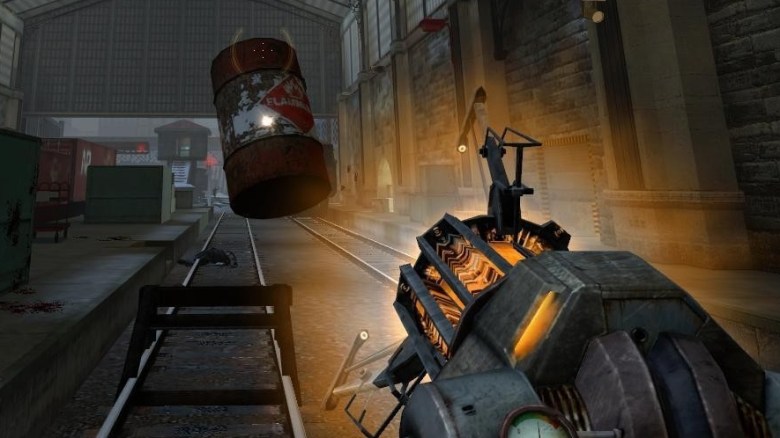
The experience feels professional, I mean there’s no other way to put it. Decades ahead of its time. The user interface is so clean that it leaves the rest of the window space for incredible storytelling and set pieces. Alyx, her father Eli, your pal Barney and the rest are worth listening to, and fighting for. Music is used sparingly, but when it ramps up you know shit’s about to go down. The challenge is perfect, I died more than a few times but never felt frustrated. Maybe I just didn’t grab that crate quickly enough, or set up enough traps. Maybe I could use my alien plushie ball to sic my alien ant army upon the enemy forces this time. Despite the game being quite linear, it never felt like I was on rails.
I guess it’s sort of ironic that a game is this polished when every surface in-game looks like it requires a good spit-shine. Valve hit paydirt here, and they knew it. You don’t just release two incredible expansions for any old game, particularly for a company that seems allergic to sequels.
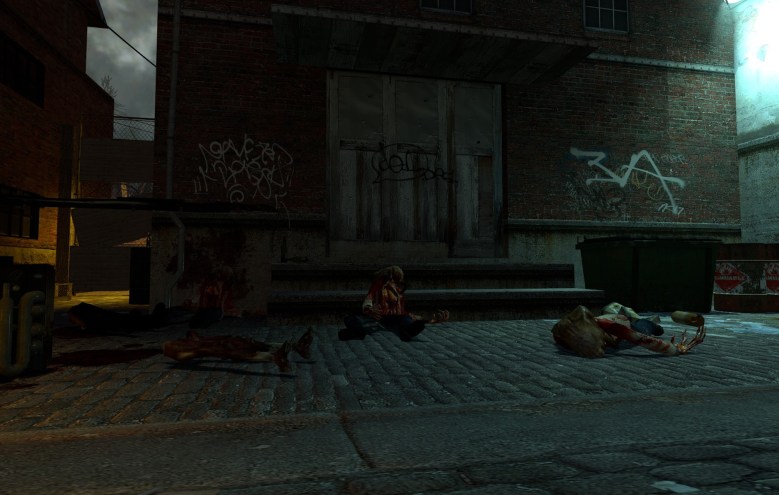
Half-Life 2: Episode Two ramps up the desperation of the rebellion to insane heights. It ends on such an unresolved cliffhanger that it feels almost cruel to revisit it now. Maybe this hurt my enjoyment of Half-Life 2 in a way, as I knew there wasn’t a real ending around the corner. I doubt Valve could have met player expectations, and there are rumblings online about how Gordon Freeman’s tale ends, but it’s possible too much time has passed for the general populace to care anymore. Although I’m not sure if Half-Life: Alyx counts as Half-Life 3, if it’s anywhere near as good as the other iterations in this series, I’m stupid not to try it out.
Whether it’s surviving the abandoned city of Ravenholm, or listening to the G-Man’s prophetic directions or fighting alongside my robot Dog, or being transported to brutalist structures, or fanning the fires of the rebellion, every single second of Half-Life 2 feels meticulously crafted and worthy of my time. I’m not necessarily the kind of guy that needs to play every lauded first person shooter, but I am the kind of guy that needs to play every Valve release. Every Half-Life game. The only way they’ve let me down is by not making enough of them, and that’s about the highest compliment I can give.

Previous 61 Uncharted 4: A Thief’s End
 The 500