Genre: First Person Shooter, Puzzle, Platformer
Year: 2007
Developed by: Valve
Published by: Valve
Platforms: PC, PS3, XBOX 360, Mac, Linux, Android, Switch
#128
Feeling Like: Through the looking glass
Imagine a game that was essentially a throw-in ends up being one of the most revered games of all time. The Orange Box had Half-Life 2 and the expansion episodes, Team Fortress 2 and a small, unknown game called Portal. What seemed to be almost a tech demo captured gamer’s hearts as much as any of the sublime first person shooters alongside it. I mentioned how the mechanics in Tetris are simple, pure, genius and timeless. Portal may as well be the three dimensional version of that.
The premise of being able to make portals, anytime and almost anywhere, must have seemed like a pipe dream at a time. Or something nobody even considered possible. The first time I shot a portal into a wall and looked into it, I reacted the same way I would if I saw a portal in real life. What…where am I looking? Where does it go? Can I go halfway in? How…how does this work?
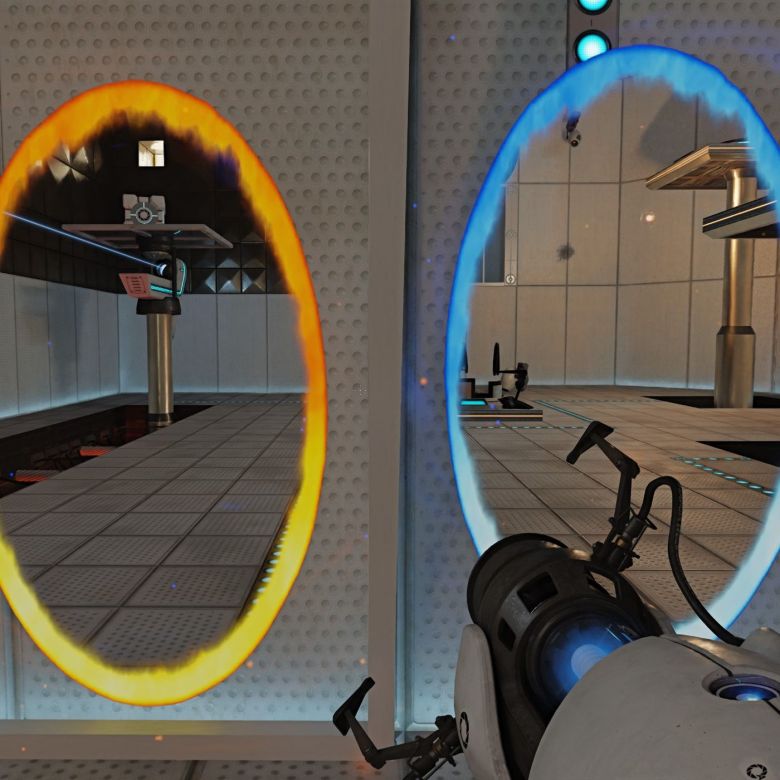
Portal is a masterpiece in every sense; it’s lean in runtime, the aesthetics are pleasant and clean, the puzzles are well-thought out, the game encourages you to experiment with very little penalty for failure, the voice acting is terrific and the sound design is iconic. It may have killed this particular genre before it started – off the top of my head, I can’t think of a single quality copy-cat when it comes to using a portal gun. When Valve hits, they launch home runs into the sun.
One of the greatest aspects of The Legend of Zelda: Tears of the Kingdom is how wonderfully free I felt trying to solve puzzles. I could practically hear Nintendo tell me, “yeah! try that. Who cares if it looks stupid? Connect that pallet to that wheel and use an arrow to activate it.” Left click, one portal emerges. Right click, the connecting portal emerges. Go ahead, try it out.
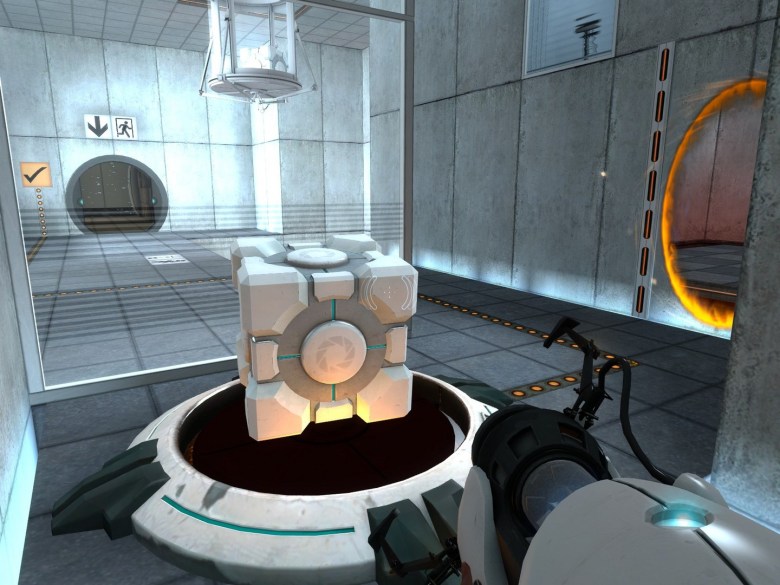
It’s not just a matter of using it to circumvent obstacles, momentum plays a huge role in navigating the testing ground. What happens if you place a portal beneath you and jump into it? The possibilities are endless, and Valve knew it. Even failure can lead to a smile and every success is followed by pleasant visuals and various “dings!” It’s very Pavlovian.
Of course the star of the show is an AI robot named GLaDOS. Even though she’s supposed to help you along it’s clear as you progress her intentions grow slightly malicious. Her dead-pan delivery and stern criticism seem more akin to a very intelligent principle, providing a mild scolding for being late, or failing a math quiz. Part of the joy of clearing an aera is hearing GLaDOS’ new quip about how well(not well) you did on the last puzzle. Even though she’s only in a few games, her legacy has outlasted thousands of other villains due to the quality of writing and the delivery of Ellen McLain.
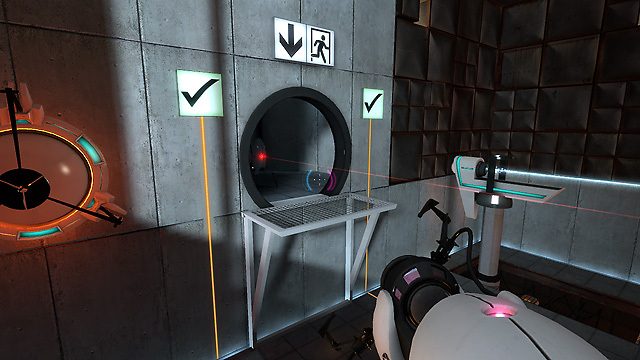
The end credits song seemingly spawned thousands of fans on its own, and is impossibly catchy. “The cake is a lie” is possibly gaming’s most famous meme, even 16 years later. What a game.
Less is more, my theatre teacher would always tell me and I tend to agree. Most games are too long – the gameplay, level design and characters rarely warrant the lengthy runtimes, particularly when it comes to Triple A open-world adventures, or Japanese Role Playing Games. Portal is a life raft in a sea of mediocrity; it’s fun to play, it’s creative in its premise and can be beaten in one or two sittings. I rarely got stuck and only used a guide for a single puzzle – I was dismayed to discover that I really would have figured it out on my own, if I’d just been more patient. I should’ve trusted Valve.
If only I could be as clever, or as condensed in my writing for the game as the game itself. This was typical Valve, back when they were developing games – they didn’t follow trends, they made their own and they made them so well that few dared to follow in their footsteps. It also set the stage for the immaculate Portal 2 which was bigger, better, funnier and expanded upon every idea we saw in Portal.
….Maybe this WAS a tech demo?
 The 500