
Genre: Action-Adventure, Puzzle
Year: 2005
Developed by: Japan Studio & Team Ico
Published by: Sony Computer Entertainment
Platforms: PS2
#7
Feeling Like: Standing on the shoulders of Colossi
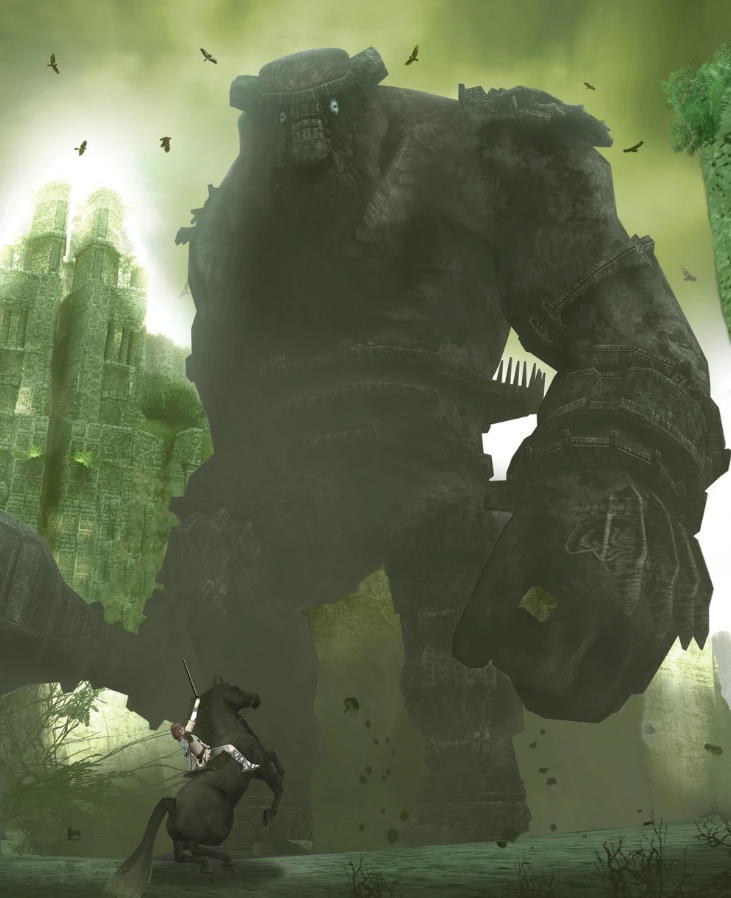
There isn’t another game like Shadow of the Colossus. If you find yourself embedded in the argument about whether video games are “art” (you can guess my stance on this), then this would be one of the most obvious examples to argue your case. It is quiet, it is brash, it is serene, it is violent. It is somber and melancholic, it is triumphant and terrific. It is sparse, yet filled with adventure. It doesn’t overstay its welcome, or bog you down with the details or busywork. It is pure. It is one of the great video game achievements.
One of the most valuable things I gained from Mount Allison was an irreplaceable group of friends, with Chris L. being a prime member. I am exceedingly lucky enough for him to be one of my closest buddies, despite being separated by (nearly) an entire country. He introduced me to a lot of things, like not being a rambunctious spazz every minute of the day, the NFL and countless video games – the most glaring example being Shadow of the Colossus. And hey, what do you know? He was gracious enough to provide his thoughts.
(Chris)
A little background before I begin talking about Shadow Of The Colossus. I am nearly 40 and very much a lapsed gamer since my twins were born nearly 4 years ago. I still boot up my PlayStation 4 on occasion, but it is almost always to put in a Paw Patrol or Trolls “movie disc” my kids excitedly brought home from the public library. But back in my university days when I met Henry, I was a proud owner of a PlayStation 2 and had a pretty good assortment of titles! I was never the video game omnivore that Henry was, but I could certainly appreciate a good single-player experience.
If my memory is to be trusted from this time period (it definitely isn’t), I bought Shadow of the Colossus knowing almost nothing about it, other than it was well-reviewed and sounded intriguing. The premise of the game sounds like a half-baked idea one of your idiot friends would come up with while playing Mega Man: What if there was a game that was ONLY boss fights?
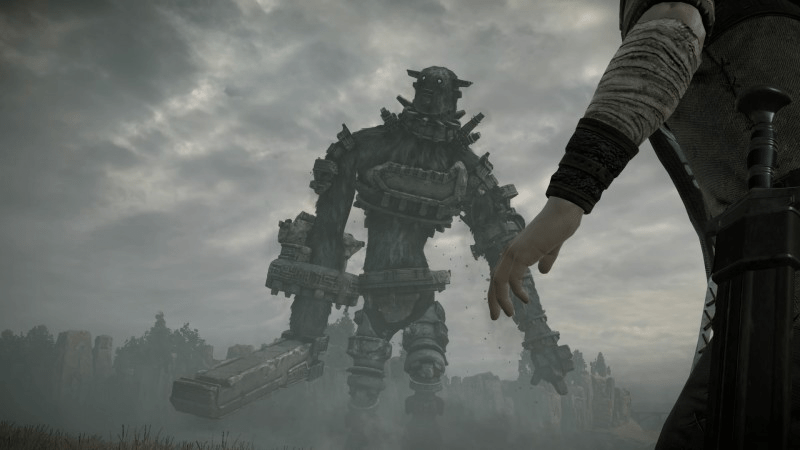
So that’s it. 16 colossuses (colossi??). Find them and kill them to save the princess. The story is actually very intricate and moving, but I’m not a professional writer (or even a good one), so I won’t bother getting into it. As the hero of the story, you’re armed with a magic sword that will point you in the direction of a monster. You travel across a beautiful and mostly deserted world on your trusty horse Agro. Once you find a giant, you use your sword and bow & arrow to figure out how to take it down and move on to your next target. Each colossus is like its own intricate puzzle that must be dissected to figure out your opponent’s weakness and ultimately prevail.
Perhaps the most interesting gameplay mechanic is the grip meter. In fact, grip is probably the most overlooked aspect of the entire action & adventure genre. Roger Ebert once wrote that the main thing any action hero needs is great grip. As entertainment consumers we’ve become accustomed to seeing impossible feats of grip strength. It’s so commonplace that it doesn’t even usually get discussed! The lone exception I can think about comes from the world of professional wrestling when The Rock made grip strength an essential focus of his training in preparation for facing Brock Lesnar at Summerslam 2002. How did it turn out? Well, The Rock lost the match, but then left the WWE and parlayed his elite grip to become the biggest action star in Hollywood for the next 20+ years. Ebert was on to something!
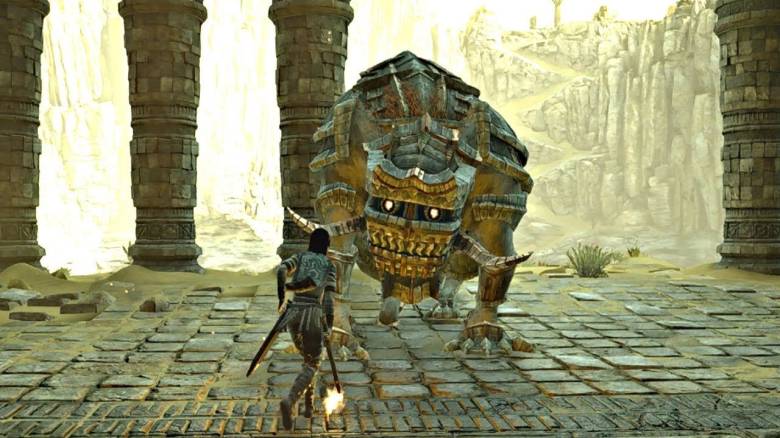
So yes, the grip meter. Much of the game focuses on climbing, either parts of the environment or on a colossus. Unlike most action stars, the hero of Shadow of the Colossus has a limited amount of grip, so you have to find ways to take breaks or strike quickly when the opportunity arises. This leads to some incredible sequences, in which you’re holding on to a violently thrashing colossus for dear life as your grip meter depletes, all the while your own knuckles have turned white from holding on to the controller like a vice.
I don’t want to spoil anything about the game, so I’ll finish off by saying it is a truly unique experience. In this day and age it’s hard to believe a game that was this critically acclaimed and commercially successful but did not spawn a single sequel. But the game feels so complete when it’s over, almost like a satisfying meal. I remember finishing the game and excitedly telling Henry he needed to play it immediately. Watching him experience the game was pure joy, apart from my occasional frustration when he couldn’t figure out how to topple a colossus right away.
Hint: always climb something, grip is your friend!
(Chris’ writeup finished)

Thanks buddy. Me trying to out-rebound Chris L. in basketball reminds me of our hero trying to clamber up a giant beast that’s the size of the Empire State building.
Oh and a side note, Chris got one thing wrong. He’s a great writer.
I wrote about Shadow of the Colossus for Snackbar, years ago. My thoughts, and the lasting impact of the game, haven’t faltered.
It’s very difficult to grab our attention these days. Gone are the days where gamers are thrilled by a simple screenshot. Our expectations are as high as ever, with emerging technology bringing us lightning-fast internet speed, HD graphics and constant social media bombardment. We have all the information in the world at our fingertips. Games play a huge part of the modern entertainment juggernaut, and the sheer capacity of information surrounding them is staggering. There are so many games, stories and characters out there for our potential enjoyment that it borders on unnecessary. I mean really, how many games do we need?
The amount of sensation we experience on a day-to-day basis is surely affecting our expectations. You hear statistics about how many advertisements we see each day, and nobody is ever pleased to hear how many it is. I’ve worked for an online marketing company for nearly six years, and the amount of impressions we see each month is so large, running a stats report can clog the entire system. So we have millions of gaming enthusiasts who have seen it all. How are we impressed? It has to have HD graphics, an incredible story, voice acting, great level design, action, romance… the whole nine yards. Right?
Sort of. In a world where “more” is all we can think of, sometimes it’s best that we slow down. Smell roses, if that’s your thing. One of the most brilliant games of the last, or any, generation of video games is Shadow of the Colossus, and it doesn’t bombard your senses with anything but pure, emotional enjoyment.
The game begins with a great example of show, don’t tell. You’re riding a horse along a huge, elevated road. We are interested right away, because the game makes us curious. Who are we? Who is the girl we have in our arms? Is she dead? Why are we in this strange, vast land? No answers are given. You prop her down at an altar and the game begins.
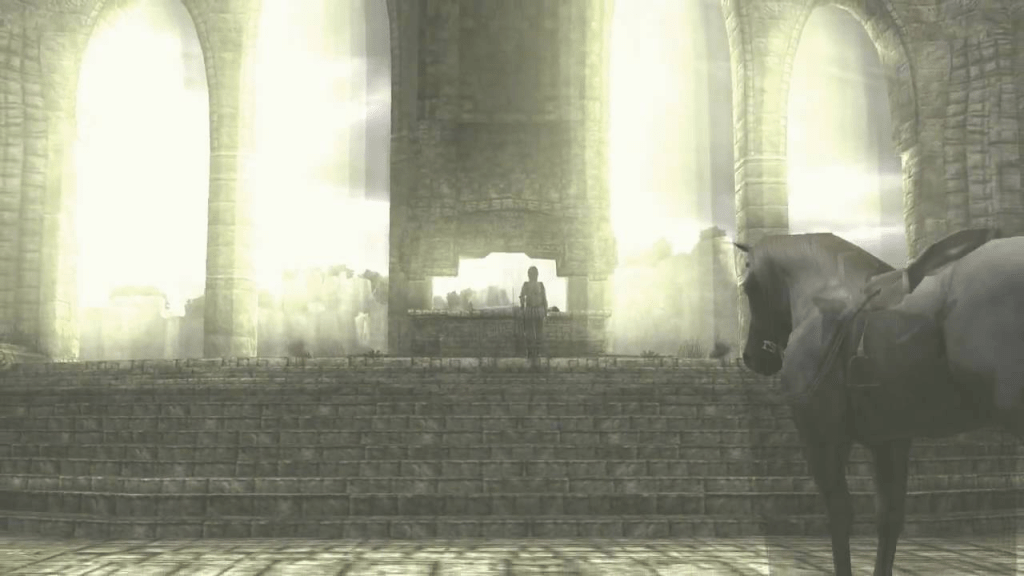
You’re not completely alone; your horse, Agro, is one of the best companions a gamer could have. He’s perfectly animated, he comes to you at a whistle, he helps you traverse the long hikes to the fights and he doesn’t shy away from the enemy. No back story is given, because it isn’t necessary. Agro is your continuity, your rock. The Colossi and environments change, but he never does.
Everything is quiet. There are no level announcements. The hero doesn’t make clever quips. You raise your sword to see a beam of light guiding you towards your next Colossi. Upon approaching them, you are in complete awe. We’ve seen big enemies in games before, but few have felt this big. Their movement, actions and sounds all match their look. They’re slow, lumbering and impossibly strong. Each boss is a combination of timing, puzzle solving, patience and aiming. Sometimes it will be an obvious solution, but more than often it isn’t. The music kicks up and the fight can seem endless, but never repetitive or dull. After defeating them, large black tentacles pierce your body. Are you dead?
You awaken in the temple, beside the altar. Another Colossus defeated, another statue crumbles nearby. Shadowy figures look over your body. A voice gives you a hint about the nature of your next foe. What does it all mean? Why are you killing these creatures?
Part of the genius of the game lies in the fact that there are no other enemies. When you embark on your quest to defeat another Colossus, there aren’t smaller minions to get past. The Colossus isn’t a boss of anything. This gives you time to think about your last fight. You gallop along at a brisk pace, surveying the beautiful landscape. You can reflect. It’s peaceful. The anticipation grows as you approach the next Colossus, but you never feel rushed. They’re there, but they’re not going away anytime soon. But don’t you want to find out what happens to the girl?
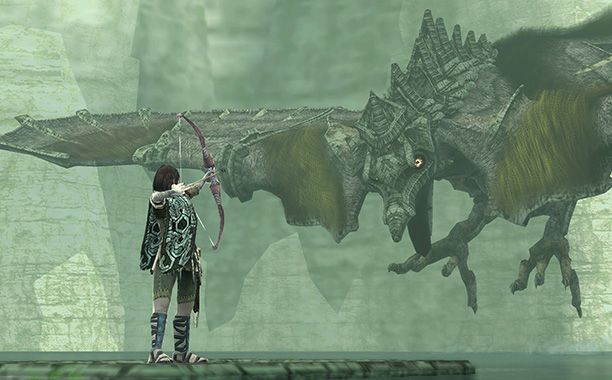
That’s not to say that there aren’t thrilling moments. They come at almost every fight. Once the Colossus sees you, the tranquil moments of inner thought are gone. A weapon the size of a skyscraper is coming at you. You have to find its weak point and memorize patterns, and you have to time it perfectly. Pacing might be the key. There are periods where there is no music and very little stimulation. You’re put at ease, but you start to crave action.
Most people talk about the first time they see a Colossus as one of the greatest parts of the game. I would never take anything away from that, because it truly is remarkable. But that didn’t make me jump out of my chair. Unlike two moments in the game, it didn’t make me squeal with uninhibited delight, the kind of behavior usually reserved for small children.
The sixth colossus, as described by the voice in the game, lusts for destruction but is no fool. He’s huge, but that’s par for the course. You run over barriers, trying to figure out how to climb up his torso and strike the killing blow. I remember I began to think of the hint. The Colossus is no fool. What does that mean? I ran and hid under the final structure, with nowhere else to run. I ensured his vision was blocked by positioning myself behind a pillar. He pauses, bends his knees and begins to look for me. His beard sways in the dust. His beard. I can grab onto his beard! I ran, and jumped, and grabbed, and smiled. The Colossus didn’t stand a chance.
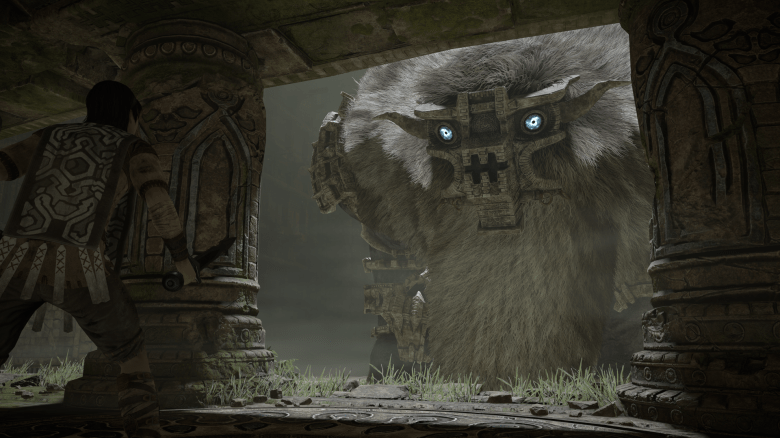
I couldn’t believe how fast the answer to the puzzle hit me. It’s not a particularly difficult one; everybody knows that there are hundreds of games that are harder and more perplexing than Shadow of the Colossus. But the pacing of the battle and the simplicity of the solution is a fine example of how less can be more. Very few would take a look at the Colossus and immediately say that they have to climb the beard. He’s charging at you, so you run to the only place you can. He’s… what is he doing, bending over? He’s looking for me. None of the other Colossi had to do that, why is he….oh, I get it!
I only wish all my battles had these eureka instances. The 12th Colossus was an exercise in futility. I figured out all the steps except the first one: swim around him and climb up his back. I was overthinking.
My experience with the 13th Colossus was right out of a big-budget Hollywood movie. You ride out to the desert and are met with a giant, flying creature, a mix between a classic Chinese Dragon and a… butterfly? It’s hard to describe. The battle doesn’t start right away. Quiet violins punctuate that you’re not even close to the beast. He’s soaring a mile above you. How do you get up there? The white sacs on his underbelly are your only clue. Arrows fly, and…wait, is it dipping? Go.
You charge your horse forward, and the music dynamically changes from quiet violins to a full orchestra blaring encouragement. Drums are pounding. Your horse races across the sand, and your hold your breath as you get closer and closer to the beast. Sand is kicked up everywhere. You can’t see clearly. A wing. A hope. You jump.
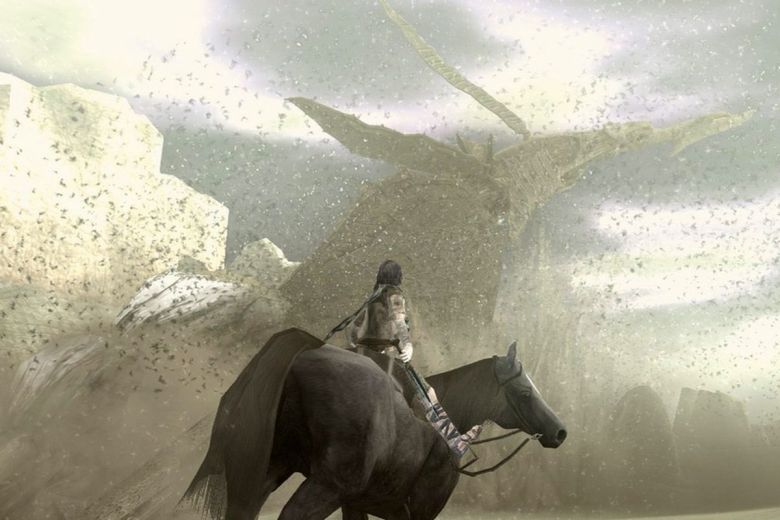
When I jumped off my horse, at a full gallop, I couldn’t see anything. The wings of the Colossus kicked up so much sand that it made sight irrelevant. I just hit the button to jump and held the grab button and didn’t let go. A few seconds passed. The sand started to clear…and I was hundreds of feet in the air, hanging onto his wing with one arm. The ground disappeared quickly beneath.
This is the kind of game that would be ruined by the kind of social interaction the PlayStation 4 wants to bring you. I’m all for connectivity, but a game like this needs to be experienced without spoilers. Nobody should tell you how to beat the fifth Colossus, or the 15th, or any of them. With all the incredible tools we have at our disposal to analyze and figure out how and why we play games, Shadow of the Colossus feels like an ancient classic. It should be immune to YouTube walkthroughs or spoilers, because the enjoyment comes from galloping across the terrain and the mystery that surrounds your character. From the transition between quiet beauty and shocking ferocity. From the stunning originality and timeless, perfect design.
For such a short game, this sure was a long entry, but the game’s quality warrants the length, and more. The remake makes an already brilliant piece of entertainment even better, with updated HD graphics and a framerate that the original creators deserved. It may not be a massive seller, it may be unfairly ignored in the general zeitgeist, but that’s the gaming community’s loss. It’s one of the finest examples of how digital entertainment can elevate our imaginations.
 The 500