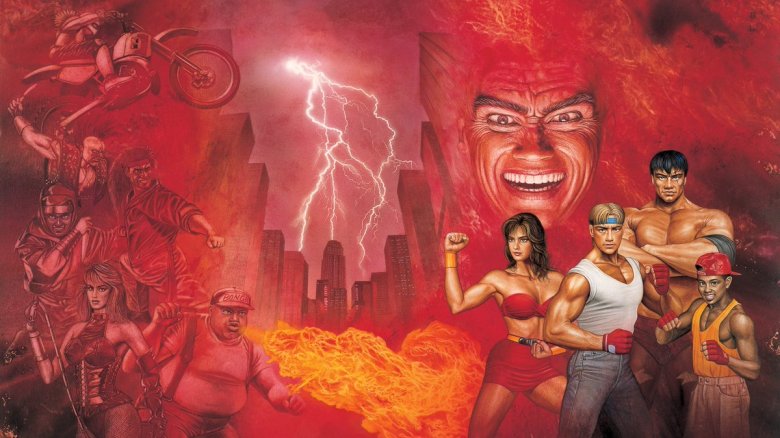
Genre: Beat ’em Up
Year: 1992
Developed by: Sega
Published by: Sega
Platforms: Genesis, Game Gear, 3DS
#139
Feeling Like: Streets ahead
Streets of Rage was a worthy, albeit flawed first crack. Streets of Rage 3 went completely off the rails, but the gameplay made up for the punishing difficulty and ridiculous story.
Streets of Rage 2 is the ideal compromise, a game that has neither of its predecessor’s or sequel’s flaws. It’s so close to being perfect, it’s my favorite Beat ’em Up and is a candidate for having one of the best soundtracks ever. The fact that these songs were released on a console from 1992 is staggering; the unique tracks featured on the Genesis and were my first introduction to club-style music. I was far too young to go to a rave, but I was old enough to understand that I wanted to attend.
Go Straight – silly title, amazing track.
Dreamer – I’d never heard something like this in a game before. I was transported.
Slow Moon – talk about variety. Moonlight across a beach comes to mind.
Back to the Industry – how did Yuzo Koshiro make THIS with 30 year old hardware?
Outstanding. Some of the tracks are so weird and strange that they border on unsettling. It’s different than what I’m used to listening, but those classic Genesis twangs and base beats highlight these tracks as the stars of the show. Beat ’em Ups may have eclipsed Streets of Rage 2 with their gameplay and presentation, but none have come close to Koshiro’s masterpiece.
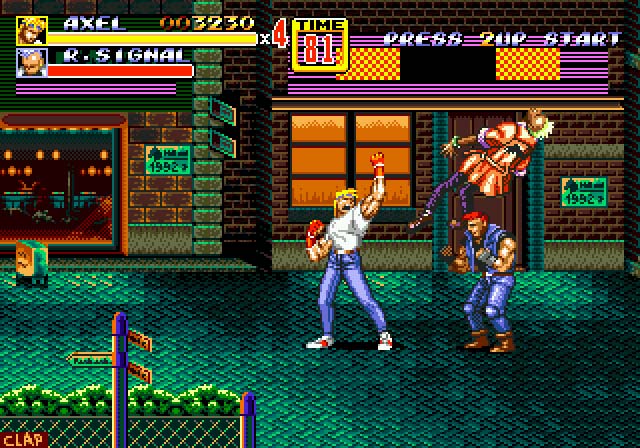
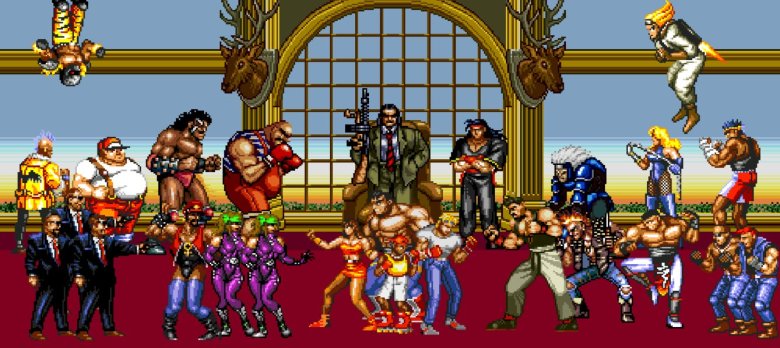
And it completely sets the tone. This is dripping in early 90s cheese, there are punks with elaborate haircuts, there are chickens to refill your health, there are neon signs everywhere. I have a feeling this is what a lot of people at the time thought of when they heard the phrase “war on drugs”. Physically fighting an evil corporation with an army of thugs at their side is a lot more fun than addressing systemic issues of homelessness and addiction. Winners don’t use drugs!
The variety of moves is what makes every encounter satisfying. There’s punching, jumping and running, sure. But there are also special moves (one for standing still, one while moving), back attacks, jump attacks, weapons and throwing weapons. You can attack while running (BARE KNUCKLE!). You can also grapple enemies, at which point you can bash them while they’re in close, you can throw them forward, or backward. You can also hit them a few times, flip over them, and then attack or german suplex them into another huddle of baddies. In addition to that, you can also grapple your co-op buddy, allowing either them to kick others while you’re keeping them stationary, or you can flip over your buddy for a shoulder attack.
This is achieved with a three-button controller.
You wouldn’t think a simple maneuver like grappling an opponent would yield so many options, but it makes the combat feel entirely alive. You have over a dozen ways to address the threat in front of you and while they’re not all completely necessary, they sure are fun.
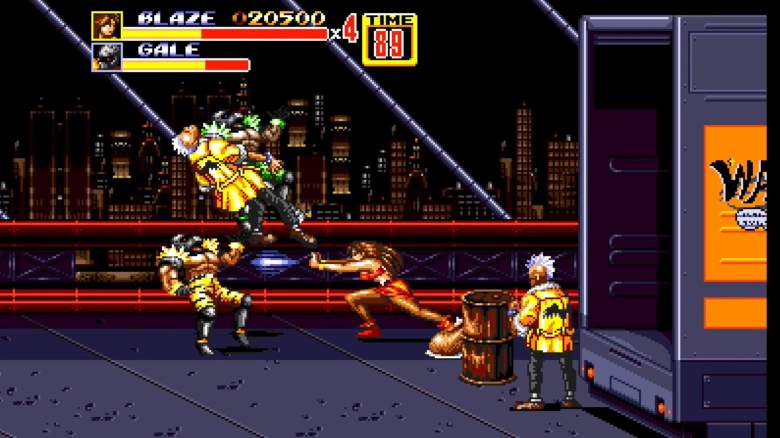
I’m a Nintendo guy through and through, but this was one of the few franchises on the Genesis that I was envious of. Forget Final Fight, it looked slow and uncool in comparison – gah! the advertising got to me! I wanted to be Axel, or Blaze, or Max and wade my way through punkers, bikers and wrestlers en route to Mr. X’s fortress while pumping buttons to the beats of some of the best video game songs ever created. The diverse settings, the background lights of the Miami-esque city and the hard-hitting action never gave my eyes a chance to wander.
This particular genre has seen a slight revival as of late, with games like Full Metal Furies and Streets of Rage 4 embracing what players loved about the genre (multiplayer, mostly), adding some bells and whistles and pricing it appropriately. Both narrowly missed my Top 10 lists, but playing through them with Eric on Game Pass was a cinch and brought us back to when we were 12 years old and rented something like Streets of Rage 2 from the video store. It was easy to pick up, thrilling to beat a boss shoulder-to-shoulder and short enough that with a few hours at our disposal, we could see the end credits.
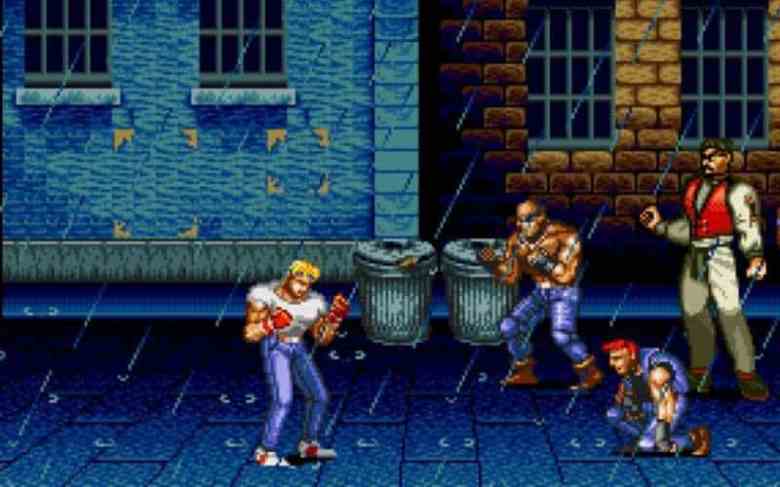
The year 1992 was a momentous one in gaming; you had all-timers like Legend of Zelda: A Link to the Past, Street Fighter 2, Mortal Kombat, Super Mario Kart and Sonic the Hedgehog 2 all vying for the rabid attention of young gamers in an emerging, exciting industry. This came at the height of the Nintendo vs. Sega console war and while Streets of Rage 2 was but a minor player, it certainly made me question the strategy of asking my parents for a Super Nintendo instead of a Genesis. I made the right choice in the end, but it also added an extra layer of joy when I met Eric Schneider in Grade 5 and discovered he, too, liked to pummel goons and rescue cities from the clutches of a cliche madman.
 The 500