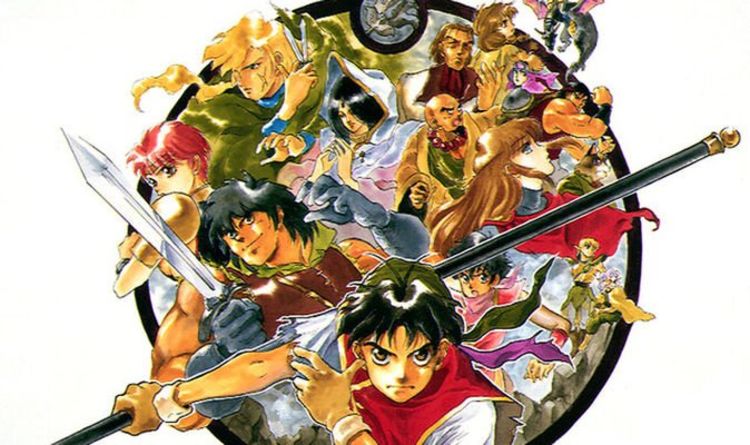
Genre: RPG
Year: 1996
Developed by: Konami Computer Entertainment Tokyo
Published by: Konami
Platforms: Playstation, PC, Sega Saturn
#151
Feeling Like: You and what army?
Gaming magazines would sometimes fall in my lap. I didn’t purchase any, and why I didn’t ask for a yearly subscription for Christmas as soon as I found out about them is beyond me. Chalk that up with learning how to skate and never playing a single game of Dungeons and Dragons as missed opportunities in my early years.
Mostly they’d be discarded willingly by my classmates at school. Unless there was a cheat code or a walkthrough you needed, there wasn’t much reason to keep them. I was always happy to be the receptacle in this regard – I was obsessed with reading and video games, the combination of the two was a natural fit.
The February 1997 edition of EGM (#32) somehow landed in my hands and I was absolutely obsessed with a guide regarding a game I’d never heard of. It showed every single recruitable character in Suikoden, a Japanese RPG that I’d never heard of before, but the art style and scale mesmerized me. The number confused me – surely you couldn’t actually control 108 characters? I was used to a handful, or even a dozen. But over 100? Was this real?
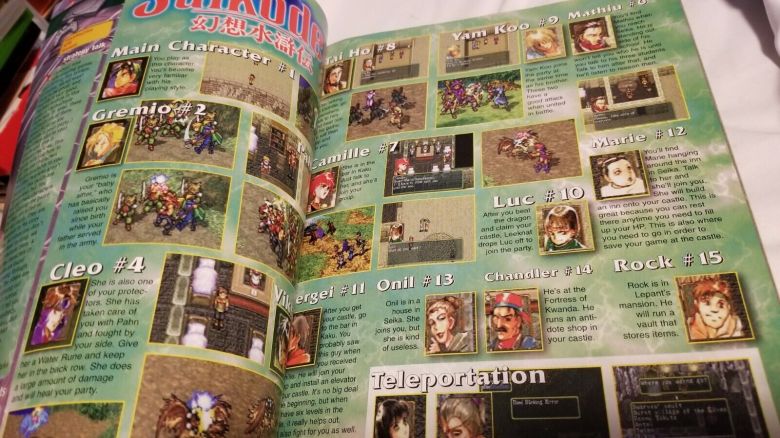
You’re goddamn right I read every single entry and began to memorize the characters’ bios and where to find them. I’d rarely been this hyped up about a game I’d discovered completely on my own for a system I didn’t even have. I had no idea what I was getting into, but I knew the art style and story structure was something totally different. I needed to play it.
The main hook of a Suikoden game is the cast. Each mainline entry allows you to recruit 108 characters, either fighting alongside you in combat or providing support in other ways, ranging from crucial to useless. You always get some kind of castle or home base to build – I mean, where else are you going to put all these people? These two features in every Suikoden game provide an extra layer of interest that other RPGs lack; you never know who you can recruit and when, so the incentive to talk to everybody and scour every nook and cranny is sky high. Additionally, there’s another major reward in play other than progressing the story and gaining experience points. Each dungeon, or major battle may unlock a new room in your castle, or the money you’ve been accruing can finally be spent on upgrading a floor, or building an elevator. It’s not quite simulation level, but it’s there. And there’s nothing like coming back to your cozy house after a long battle with a vampire.
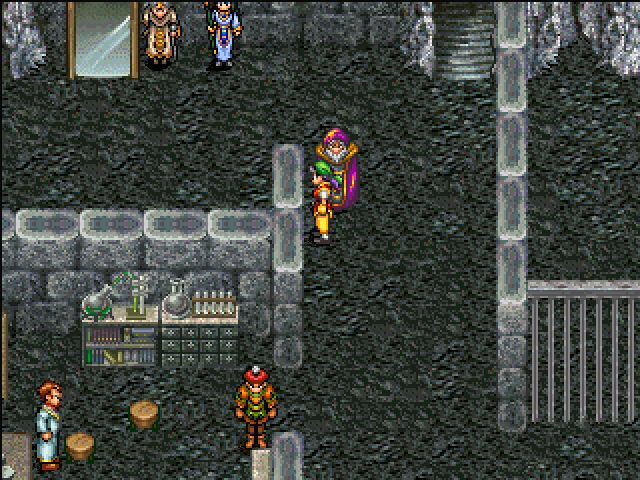
Another staple is the storyline typically revolves around warring factions instead of saving the world from a big bad. This is refreshing since it usually means motivations are clearly laid out instead of wizards going insane, or some jerk wanting to restart the world by erasing humanity. You really feel like you’re at the center of a large conflict, rarely do pivotal moments happen off-screen. Because the cast is so large, I never felt like I was experiencing any kind of repetition. In one moment, Viktor and Flea would come in with breaking news about a key battle and then Luc may teleport in with a request of his own. Konami was still finding its footing in regards to pacing, which they would perfect in Suikoden 2.
Another genius move is how they treat newcomers to your party. In Breath of Fire 2, one of the most critical mistakes they made was not allowing benched friends to gain experience. If you ever wanted to try out Spar or Bow instead of Kat and Nina, they’d be horribly under-levelled and fights would be infinitely more difficult. In Suikoden, as soon as new members join the first battle will result in a massive experience boost, which means it only takes a few fights for them to catch up. This removes any hesitation to try out somebody new in your party.
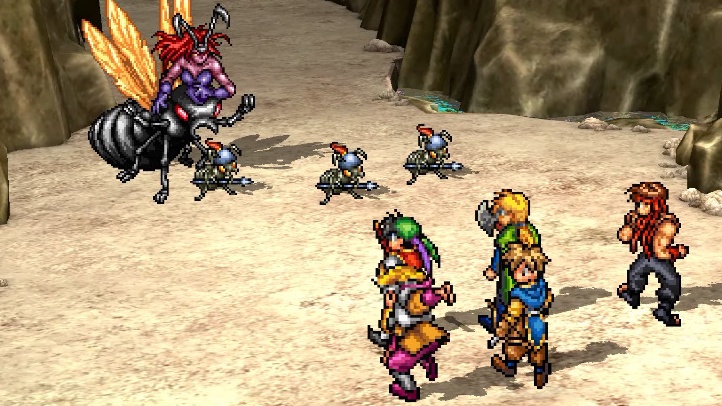
What strikes me, still, are the character sprites. They’re far bigger and more detailed than most other games I’ve played. This makes them genuinely interesting to look at, with greater ability to provide intricacies in their costumes and give everybody more personality. Fantastic.
There’s so much that works here; the army battles are both a break from the usual routine and only occur at major story points. The soundtrack is excellent, “Forgotten Days” being my favorite. You can do combination attacks (Unite Attacks here), so you’re encouraged to experiment with different party formations. The difficulty is fair. I didn’t feel overwhelmed despite the grand scale. The game is lean, only requiring approximately 25-30 hours to beat. The dynamic camera angles in battle are simple, but keep things interesting from a visual perspective. There’s enough grounded, gritty conflict but also monsters and magic runes to provide a delightful mix of sensible and silly.
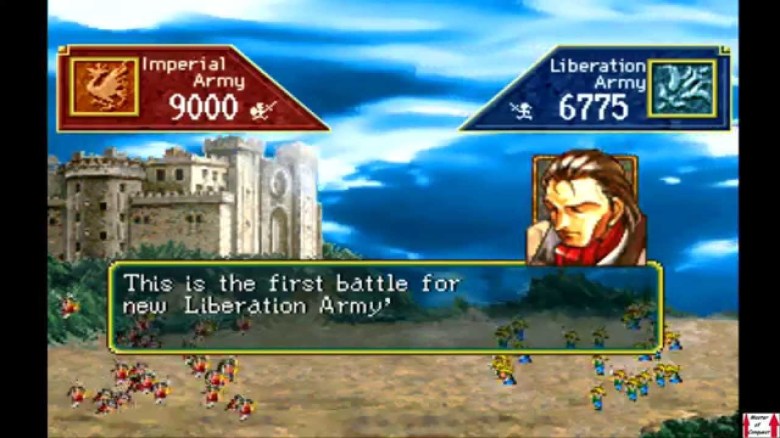
I enjoyed how each recruit brought something different to the table. Not just in combat, hell half of them don’t ever swing a sword. No, it’s more their personality and how they interact with the team during the story. Some will be welcomed instantly, others won’t be trusted due to their shady past. Some were surprisingly featured more than I would have thought, a seeming one-off character rises to become one of your top advisors. It’s fascinating and even though the writing is very mid 90s, and the punctuation leaves a lot to be desired, but it still kept me intrigued throughout.
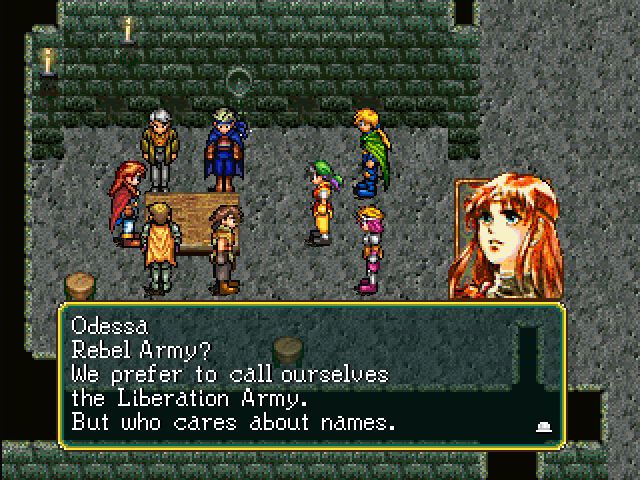
Due to how much I enjoyed Suikoden, I would go on to play every single entry in the series, many of which you’ll find on the 500. The formula clicked for me – I like when stories aren’t focused on saving the entire planet or galaxy, but rather the desires and conflicts surrounding a few entities. Star Trek Discovery could take note here. Just because you want something to feel epic, doesn’t mean the stakes have to be universe-spanning.
Plus, this was a precursor to one of the greatest JRPGs ever made, Suikoden 2. I feel like I’m just warming up for that one, but the original deserves accolades for trying something new and bold. If only Konami hadn’t taken their ball and gone home, we’d likely have had several additional Suikodens by now.
 The 500