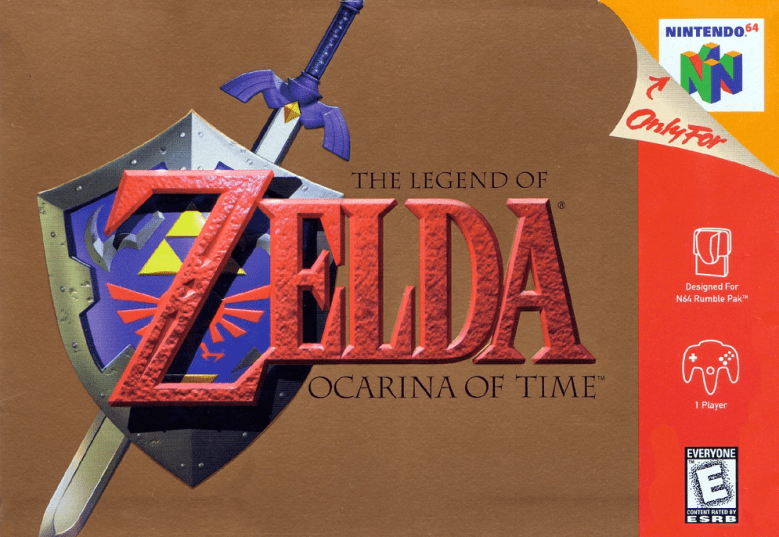
Genre: Action-Adventure
Year: 1998
Developed by: Nintendo EAD
Published by: Nintendo
Platforms: N64, GameCube
#3
Feeling Like: Hey! Listen!
We all had N64s, almost right away. As soon as we saw Super Mario 64, that was it. Our sole mission in life was to hang out with friends and acquire Nintendo’s latest console. We were delighted over the newfound third dimension and while the graphics were rough around the edges, literally, that didn’t enter our minds at the time. Video games had entered a new plane and we wanted every part of it.
However, it wasn’t until The Legend of Zelda: Ocarina of Time that our mission became an obsession. The GamePro magazine cover at Blockbuster had a massive preview featuring it. While my family waded through the aisles trying to pick the Friday night movie, I perched by the cashier and read as much as I could.
“Hey.”
I looked up, fearful that he was going to tell me that this wasn’t a library.
“I heard you grow up in that one.”
“In Zelda?”
“Yeah. You start out as a kid, and get to be an adult later. Cool, huh? I can take you over here!”
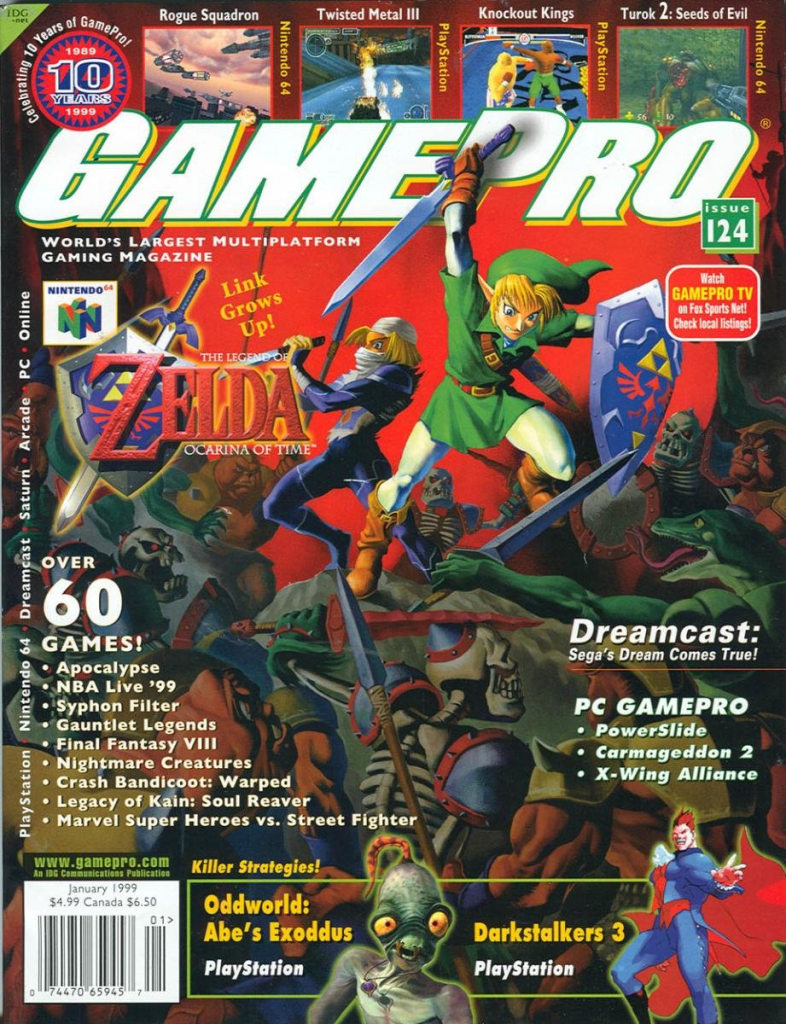
As if I couldn’t be more excited. This was the first instance where I remember researching a game before it was released. I even tried the internet for the first time solely to discuss plot points, or seek advice. The very first post I ever made was thanking a fella for providing cliff’s notes of another website’s rundown of the game.
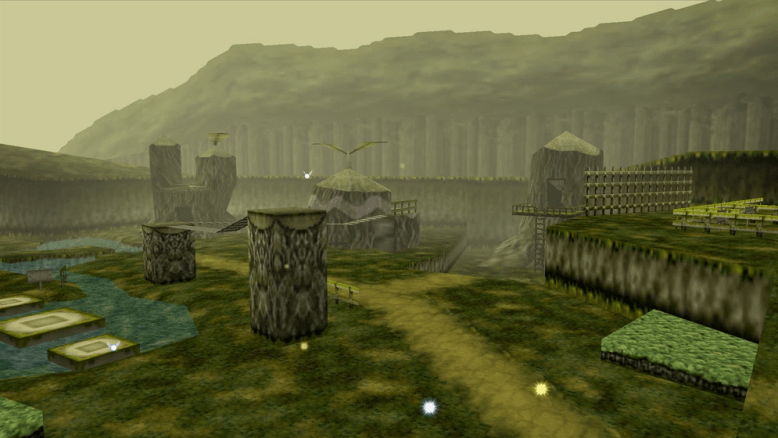
This felt special, and grand. I think every one of us asked for the same thing for Christmas in December of 1998, and we all got it. When we snapped on the power, we were met with this.
No Mario yelling at us, no outlandish music pumping us up, no obnoxious narrator telling us the title of the game. Just quiet, pensive music and Epona’s galloping across Hyrule. It was if Nintendo was trusting us to be patient and look. Just look. Look at this incredible overworld, look at the detail on the graphics, look at THE HORSE. YOU CAN RIDE A HORSE. Every game now lets you ride some kind of vehicle or member of the equine family, but in 1998 that was not the case. Every instinct I had led me to one conclusion – this was the greatest thing I’d ever seen.
I wanted to play it anytime, anywhere. I didn’t care if Aslam was ahead of me in the story, I wanted to see what heart containers he’d found. Eric beat the boss of the Fire Temple before me? No problem, let’s talk on the phone while swapping tales of Link and swords and magic. Seriously, we used to tie up the line for hours while we played alongside each other, trying to mirror each other’s exact movements in-game. Any excuse to play with one of my best buddies in the shared hobby we had. Here’s a picture of me doing exactly that.
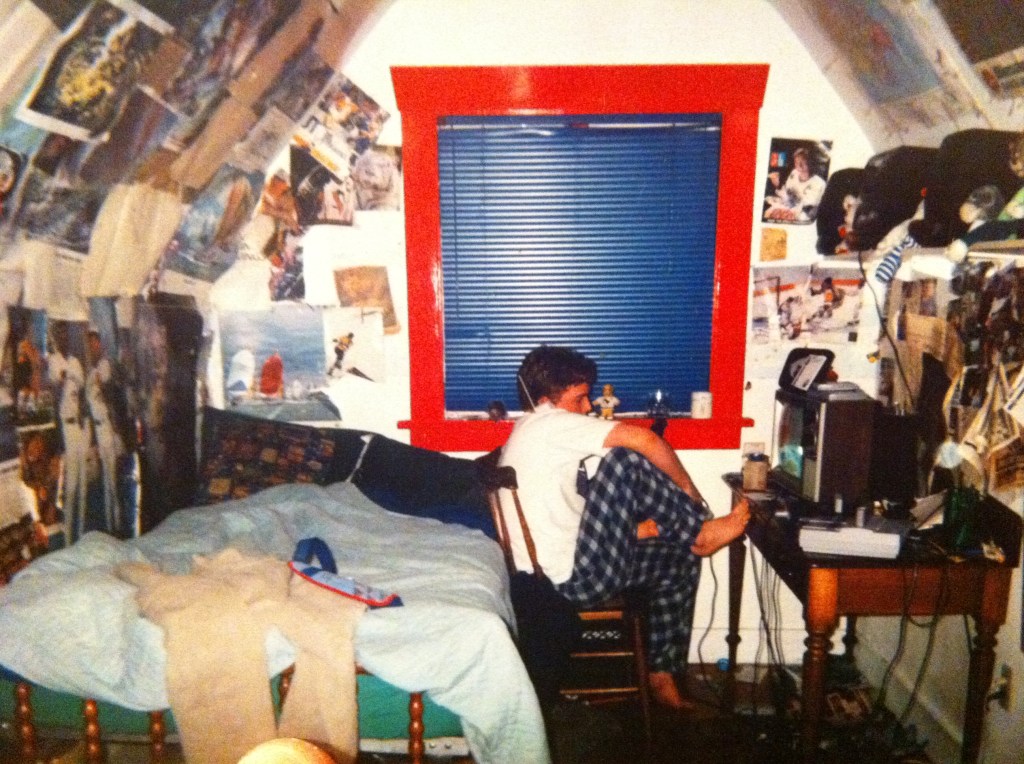
You know I don’t ever remember thinking my room was small, or cluttered. What else did I need? I had my bed, I had my tiny little CRT with a Super Nintendo and N64 hooked up to it. I could bring the cordless phone up there, I had a bookshelf and a closet. I fail to see the problem.
I guess when you look at the last picture I took in that room before my parents sold the house does make it look quite tiny.

We have Ocarina to thank for Z-targeting, which basically just gave the player a means to hone on a specific enemy and be able to focus the camera on them instead of it swirling around. Again, not impressive in 2023. In 1998, legendary. I think some reviews still refer to “Z-targeting” for modern games. It made a complex world easy to navigate and potentially deadly enemies slightly more palatable. You have to remember, this was some gamers’ very first attempt at a game with a third dimension in play. Nintendo, unsurprisingly, led the way with intuitive controls and genius mechanics.
It’s one of the few games where I can tell you the exact order of the temples, or at least a rough idea. You’re a kid – Kokiri forest, then Deku Tree. Dodongo’s Cavern is next, then the weird fish. Then Ganondorf essentially wins and you’re thrust into the future. Hyrule Market is no more, it’s all under Ganon’s rule. Zelda is here, but not quite here. You see the consequences of failure, and you’re not a kid anymore. You can use the Hylian Shield as it was meant to be, not as a backpack you can only duck while using. Forest Temple. Fire Temple. Water Temple (barf). Shadow Temple. Spirit Temple. Take on Ganondorf, then Ganon. Save the world.

There’s far more than that in between that is hardly placeholder tasks. Sneaking past the guards to talk to the Princess. Archery competitions. Digging up graveyards. Collecting chickens and putting them back in their pen. Dodging volcano eruptions, forging a giant sword and horse racing. Typing all these memories out puts a giant smile on my face, there’s no other way to put it.
Some screens had a fixed camera perspective, but for the most part it was up to me to locate a target I could Hookshot to, or which switch to hit. It wasn’t without frustrations, as I wasn’t the wisest when it came to puzzles. But when the solution hit, or I was rescued by a friend’s whisper about what to do, it felt like I had unlocked something ethereal and important. The music may not be on many “Best of” lists, but it was undoubtedly effective. I can still hear Kokiri Forest’s Theme in my dreams. Or the soothing notes of Kakariko. Or the sorrowful Sheik’s Theme. Or Gerudo Valley’s incredible guitar inspired track.
Complicated melodies or sweeping orchestral aren’t present here, but what Ocarina did, better than any other game to date, was make you feel like you were in a very specific time and place. It evoked emotions of wonder, exploration and heroism like no other. It won countless Game of the Year awards in a year that is generally considered the best year ever. You think 2004, 2007, 2020 or 2023 were good? This a year that gave us Half-Life, StarCraft, Metal Gear Solid, Baldur’s Gate, Banjo-Kazooie, Resident Evil 2 and Xenogears, among others. Yet Ocarina toppled them all.
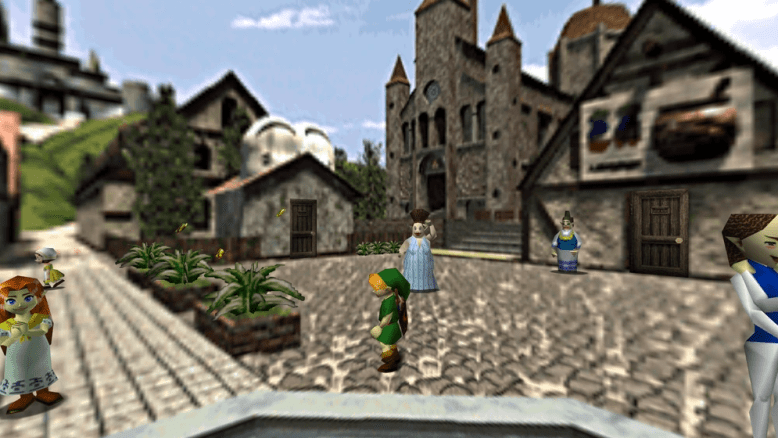
We tried everything. Everything. Was side hopping or back flipping faster than running? Can we roll the whole way and make sure the castle gates don’t close on us before nightfall? Have we tried bombing every square inch of this field? Can we kill the owl? What happens if we play the Scarecrow song here? Can we glitch the system to give us access to more bottles? Why is this shark behind bars at Lake Hylia? Can we beat the boss before it goes back to its defensive stance? How will this NPC react to this item?
It was breathtaking. Swiping our sword in an enemy’s face was just as satisfying as blowing up a wall with a Bombchu. Boss fights were hyped up, so much so that they each got their own title card. I’ll never forget the first time I saw Ganondorf transform and there isn’t a quick description of the upcoming boss you’re about to confront. No “Parasitic Armored Arachnid: Gohma” or “Bio-Electric Anemone: Barinade”.
Just Ganon. Bon!
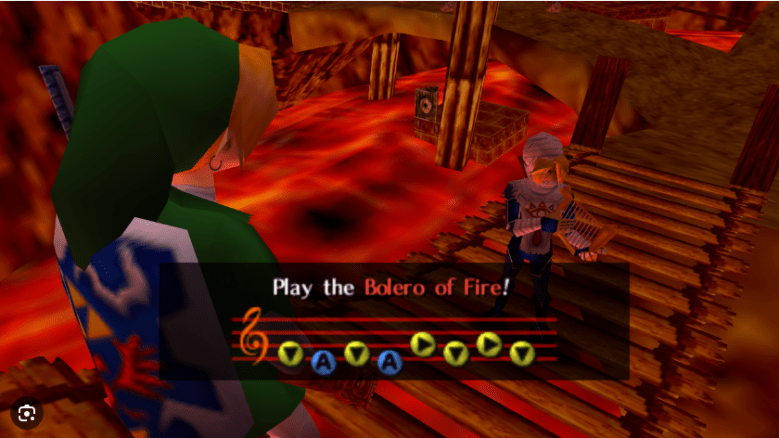
The amount of tools at your arsenal means there are dozens of ways to take down challenges, but it also meant that the playground we were given free reign of was worthy of discovery. Every village was filled with things to do, every new race you encountered were strange, happy or mysterious. There wasn’t a lot of filler to be found – even side quests would provide meaningful rewards. Hunting Skulltulas will be the only time I willingly try to locate spiders in my life. Using music as theme and transportation method meant these tracks got into our heads and never left. Has a Windmill ever sounded more badass?
Other Zeldas have come and improved upon Ocarina’s masterful construction. Despite the 3DS version enhancing the original, it’s impossible to go back and appreciate the hundreds of reasons why we fell in love with it. This really was THE game to talk about with your friends for years to come, long after you’d seen the credits. We’d set little challenges for ourselves to change the pace, like beating it without any fairy upgrades, or some weapons, or even extra heart containers. Any excuse to fall back into Link’s amazing adventure, the best N64 game ever made and #3 on the 500.
 The 500